
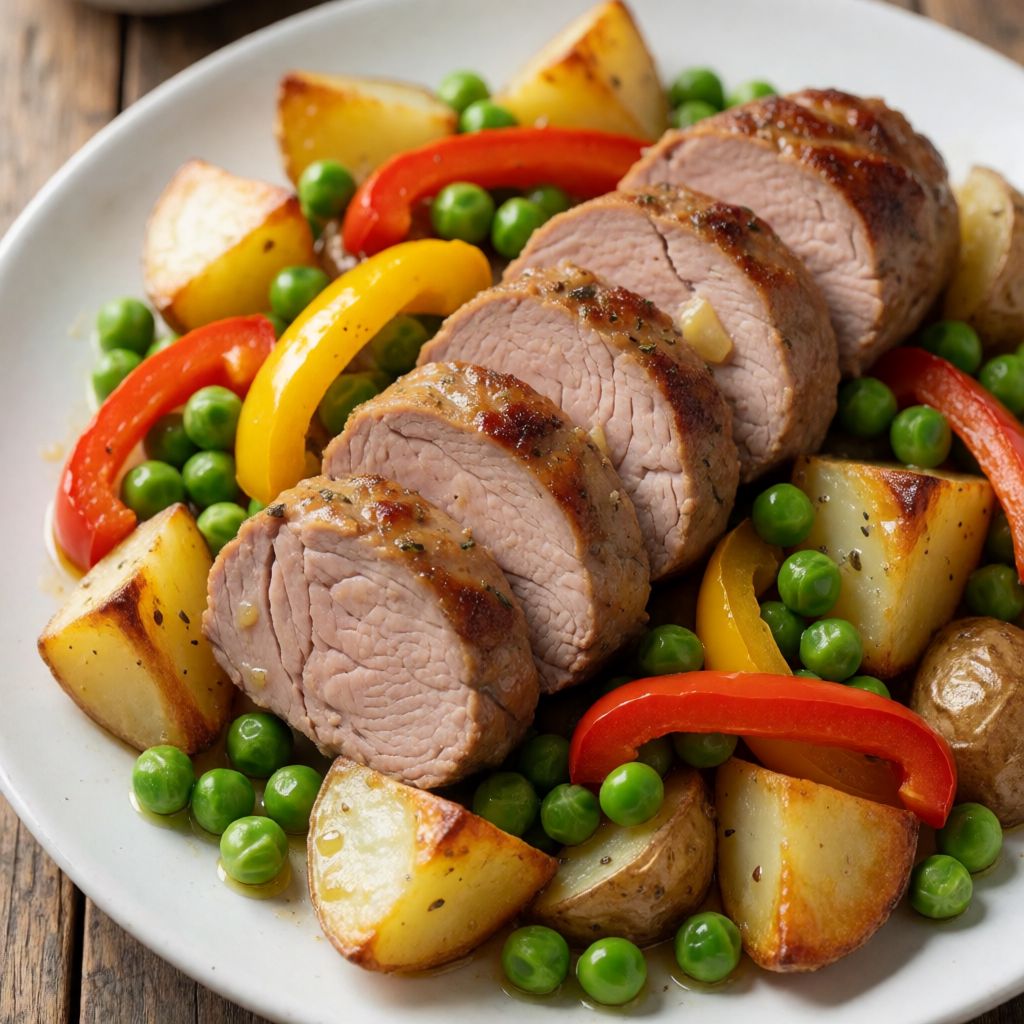
 AI photo
Pork Tenderloin with Vegetables
Grilled pork tenderloin slices served with a quick sauté of potato, peas, pepper and basil.
Ingredients
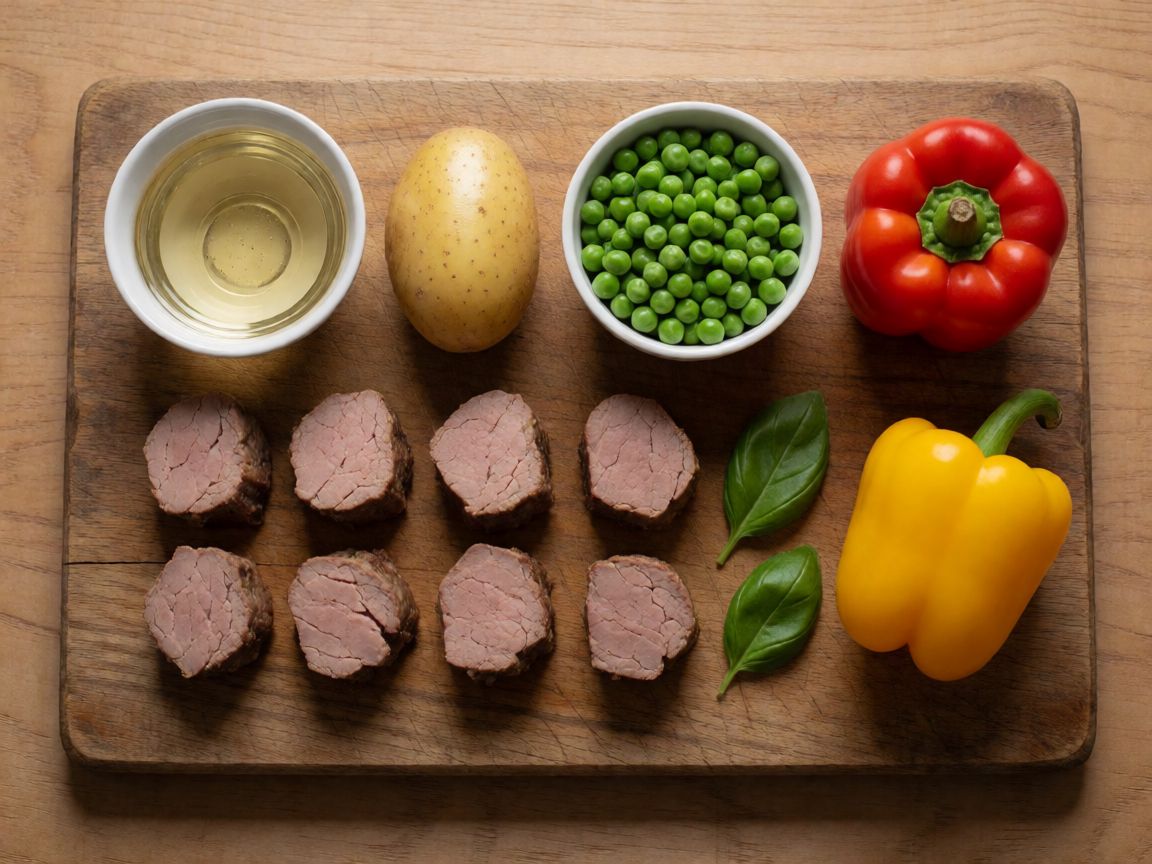
- 8 pcs Pork Tenderloin slices or medallions
- 1 pcs Potato
- 200 g Peas
- 1 pcs Bell Pepper
- 2 pcs Basil sprigs
- 4 tbsp Olive Oil
- Salt to taste
- Black Pepper to taste
- 125 ml White Wine







Steps
Wash, peel and dice the potato and bell pepper into small cubes, transfer to a bowl and let rest briefly.
Shell the peas.
Pour olive oil into a pan, add the vegetables and peas, add the basil sprigs, season with salt and fry over high heat.
Pour in the white wine and let it evaporate.
Lay the pork tenderloin slices on a board: sprinkle with salt and pepper, drizzle with oil.
Heat the grill and place the meat oiled side down.
Sear on one side, then brush the top side with oil.
Turn the meat and cook until done. Doneness: 70°C internal temperature.
Arrange the pork tenderloin on a plate with the vegetables and finish with a sprinkle of black pepper.
This is a two-pan dish pretending to be one: medallions on a hot grill, vegetables in a hot pan, and a plate where they meet at the end. Nobody actually cooks pork and veg together here, whatever the title implies — the pork wants dry, fierce heat and the vegetables want a bit of liquid and time. Keep them apart until the plate and you're fine.
What decides whether it works is two separate questions about two separate pieces of equipment. For the pork: did you get a sear before you got grey, dry meat underneath? For the vegetables: did the potato go from raw-crunch to a soft bite without turning to mash? Get both right and the wine does its one job — lifting the fond and giving the peas something to sit in — and the dish holds together.
Some say pork has to be cooked until it's pale right through, no pink anywhere — no, that's leftover fear from decades ago when trichinosis was a real risk in badly-reared pigs. Modern pork doesn't carry that risk the way it used to, and 70°C core is already well past "safe," it's just not past "dry." Pull it a touch before that if your probe reads fast, because the meat keeps climbing a few degrees off the heat on its own.
Start with the potato, because it's the slowest thing in the pan and everyone forgets that. Cut small — proper small, pea-sized cubes, not "diced" in the loose sense — because a domestic hob pushing out vegetables in a hot pan for a few minutes has no patience for a potato chunk the size of a Sunday roast one. Small cubes cook through in the time it takes the pepper to soften and the peas to go from matte to bright green. If the potato's too big you'll end up with scorched outside and a bullet in the middle, and no amount of wine fixes that — wine evaporates, it doesn't steam-cook a potato through.
The bell pepper and the fresh peas are there for colour and a clean, slightly grassy sweetness that cuts the richness of the pork — frozen peas work perfectly well if fresh ones in the pod aren't about; they go in a minute or two later since they're already cooked through from blanching at the factory, and you're really just warming them and catching the flavour of the pan. Basil sprigs left whole (not chopped) are there to perfume the oil, not to be eaten as basil — think of it the way you'd use a bay leaf, there for the oil to carry its smell, then out or pushed to the side before serving.
The olive oil should be decent but doesn't need to be your good finishing bottle — any oil with no smell of its own that can take real heat will do the vegetable side; for the pork, where the oil is doing direct contact with a hot grill, you want one that won't burn and turn bitter before the meat sears, so again neutral is safer than a heavily peppery extra virgin. The white wine's job is purely mechanical: it lifts whatever's caught on the bottom of the pan — the fond — and turns it from "stuck and about to burn" into a thin, winey liquid the vegetables sit in. Any dry white does this; a sweet wine will fight the pepper and potato rather than support them, so skip dessert wines even if that's what's open.
For the meat, eight slices for four people means two each, which only works if you're buying tenderloin — the loin's leanest, most tender cut, with almost no fat to render and nothing tough to break down, which is exactly why it suits a fast grill rather than a slow roast. This is a different economics from your Sunday joint: the joint is a cheaper, tougher cut that needs hours of gentle heat to become tender, while tenderloin is already tender, so the whole cooking logic flips — short, hot, and done. A domestic hob won't give you a proper char-grill's heat, and that's fine; a ridged griddle pan or even a very hot ordinary frying pan gets you close enough, you're chasing a browned crust, not grill marks for the look of it.
Season the meat before it touches heat, not after — salt pulled moisture to the surface earlier would have made the sear weaker, so salt right before cooking, and oil the meat rather than drowning the pan, because oil in a near-smoking pan burns and turns acrid, while oil on the meat's surface browns with it. Press a finger to the slice as it cooks: raw gives, cooked resists — that's your sense-cue if you don't own a probe thermometer, but if you do, 70°C read is your floor, not your target to hover at for ten minutes while you finish the veg.
Patience here isn't about long cooking — this dish is fast — it's about not rushing the two separate timings into one. Get the vegetables started, let them actually sit in the wine a moment rather than pulling them the second it's poured in, and only then turn to the meat. Trying to run both pans at identical speed usually means one of them gets ignored, and it's always the vegetables that end up raw-crunchy because the meat's smell and sizzle pulls your attention first.
·