
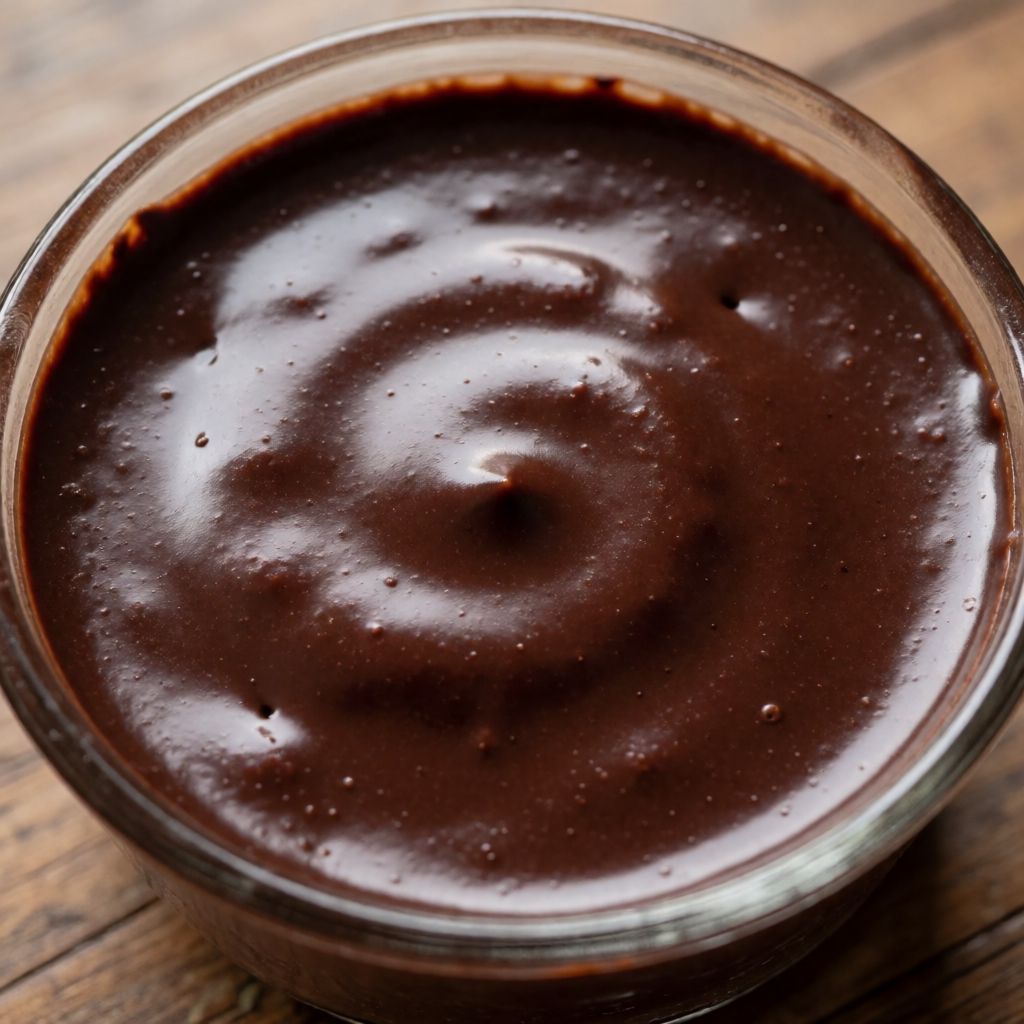
 AI photo
Chocolate Crème Pâtissière
A rich chocolate custard cream, simple to make and perfect for filling cakes or pastries.
Labels are worked out automatically from the ingredients and can be wrong. Check the packaging if it matters to you.
Ingredients
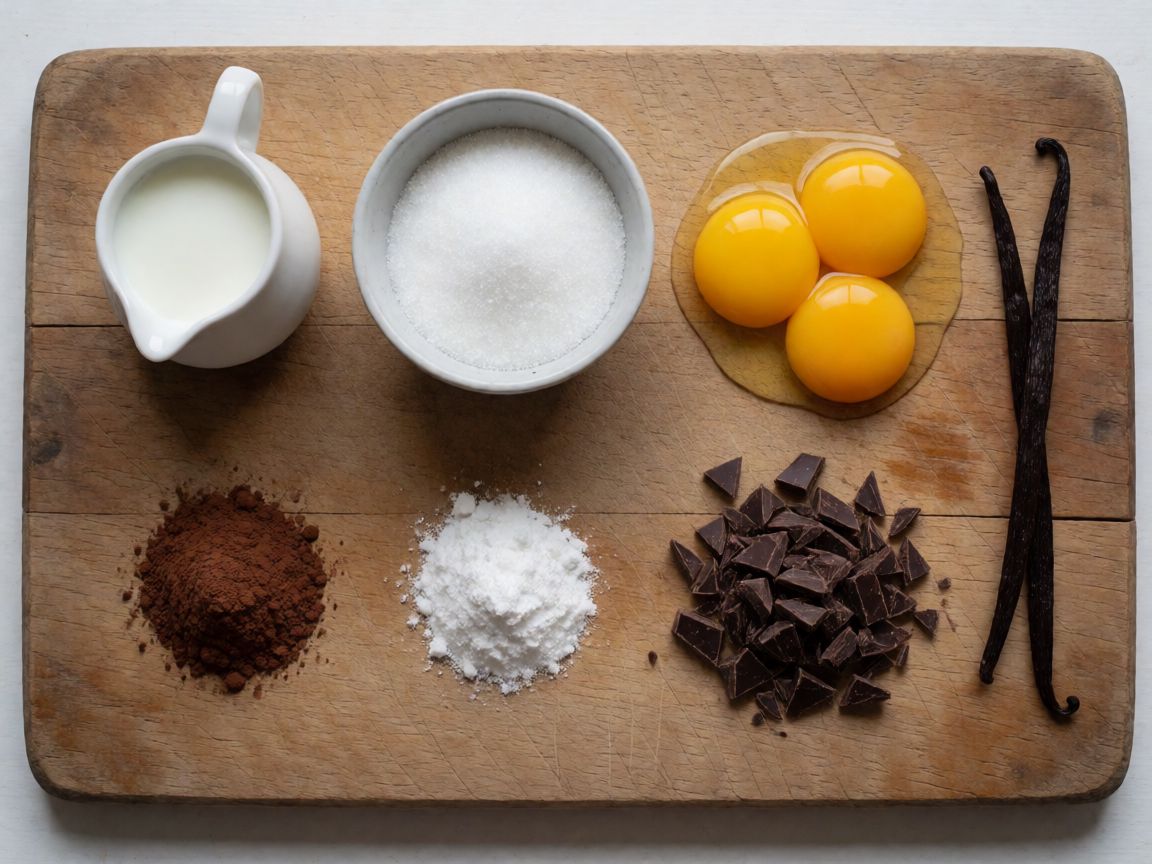
- 500 ml Milk
- 125 g Caster sugar
- 3 pcs Egg yolk
- 25 g Cocoa powder
- 40 g Cornflour
- 100 g Dark chocolate
- 1 pcs Vanilla pod






Steps
Pour the milk into a saucepan, split the vanilla pod lengthways and scrape the seeds into the milk.
Bring the milk to the boil.
Whisk the egg yolks with the sugar until smooth.
Add the cornflour and cocoa powder, and mix until smooth with no lumps.
Pour the mixture into the hot milk and stir constantly until the cream begins to thicken.
Remove from the heat, add the chopped dark chocolate and stir until smooth.
Transfer the cream to a bowl and cover with cling film so it touches the surface.
This is crème pâtissière with cocoa and melted dark chocolate folded in — not a chocolate mousse pretending to be custard, but the actual pastry cream that sits under tarts and inside éclairs, just made to taste of chocolate twice: once in the cocoa that cooks with the starch, once in the chocolate that melts in afterwards, off the heat, when it can keep its own character instead of getting boiled into submission.
What decides whether it works is not flavour, it's starch. Cornflour is the thing standing between you and scrambled chocolate eggs. Egg yolks alone would curdle somewhere around 70°C — well before the mixture is hot enough to thicken properly. The cornflour coats the yolk proteins and lets you push the mixture to a full boil without them seizing. That's also why you whisk constantly once the yolk mixture goes into the hot milk: not for show, but because a cornflour-thickened custard scorches and lumps on the bottom of the pan the second you stop moving it, long before the top looks done.
Some say custard needs a bain-marie, endless patience, a thermometer. No — not this one, because the starch is doing the stabilising job that gentle heat does for a crème anglaise. You're allowed to bring this one to a proper boil, on real heat, which is exactly why it only takes a few minutes once it's in the pan, not twenty of fussing.
Start with the milk. Whole milk, because the fat carries flavour and also makes the texture rounder — skimmed will set thinner and taste thinner, no magic there, just less fat to carry weight on the tongue. Splitting the vanilla pod and scraping the seeds into the milk before it boils gives the vanilla time to actually infuse rather than just float on top; if you've only got vanilla extract, a teaspoon stirred in off the heat at the end does almost the same job — you lose the little black specks, which were always more about looking artisanal than tasting different.
The sugar does two things, not one. It sweetens, obviously, but whisked into the yolks first it also protects them — sugar grains partly dissolve into the yolk and interrupt the protein network that would otherwise tighten and curdle under heat. That's why you whisk yolks and sugar together before anything else touches them, not after.
Egg yolks here are mostly for colour and a faint eggy roundness under the chocolate — the actual thickening is cornflour's job, as above. Three yolks for 500ml milk is a modest ratio; this isn't a yolk-heavy custard like a crème anglaise, it's starch-led, which is also why it reheats and pipes better than an egg-only custard would.
Cocoa powder and cornflour get mixed into the yolks dry, together, before any liquid touches them — this is the step that stops lumps, not the whisking you do afterwards. Cocoa powder is practically pure dry cocoa solids with no fat to melt and smooth it out, so if you try to stir it into liquid first it clumps into little dry pellets that no amount of later whisking fully breaks up. Mixed dry into the yolk-sugar paste, it disperses into fat and moisture before it ever meets the hot milk.
Dark chocolate goes in last, off the heat, chopped rather than whole — not because whole squares won't melt, but because chopped chocolate melts fast and even in cream that's already cooling, so you're not forcing it back onto heat and risking the eggs after they've just set. Use chocolate you'd eat on its own; a dark chocolate around 60-70% cocoa gives you bitterness to balance the sugar without tasting chalky. Milk chocolate will work but the result turns sweeter and softer-flavoured — fine, just a different pudding.
Four people, 500ml milk — this is a modest batch, enough for four small pots or to fill a single tart, not enough for a crowd. It keeps a day or two in the fridge under its cling film, and it thickens further as it cools, which is normal and not a sign you overcooked it. Don't rush the chilling by the way — patience is the last ingredient here too, the cream firms up properly only once it's had the time in the cold to set, not the moment it comes off the stove.