
 AI photo
Apple Fritters
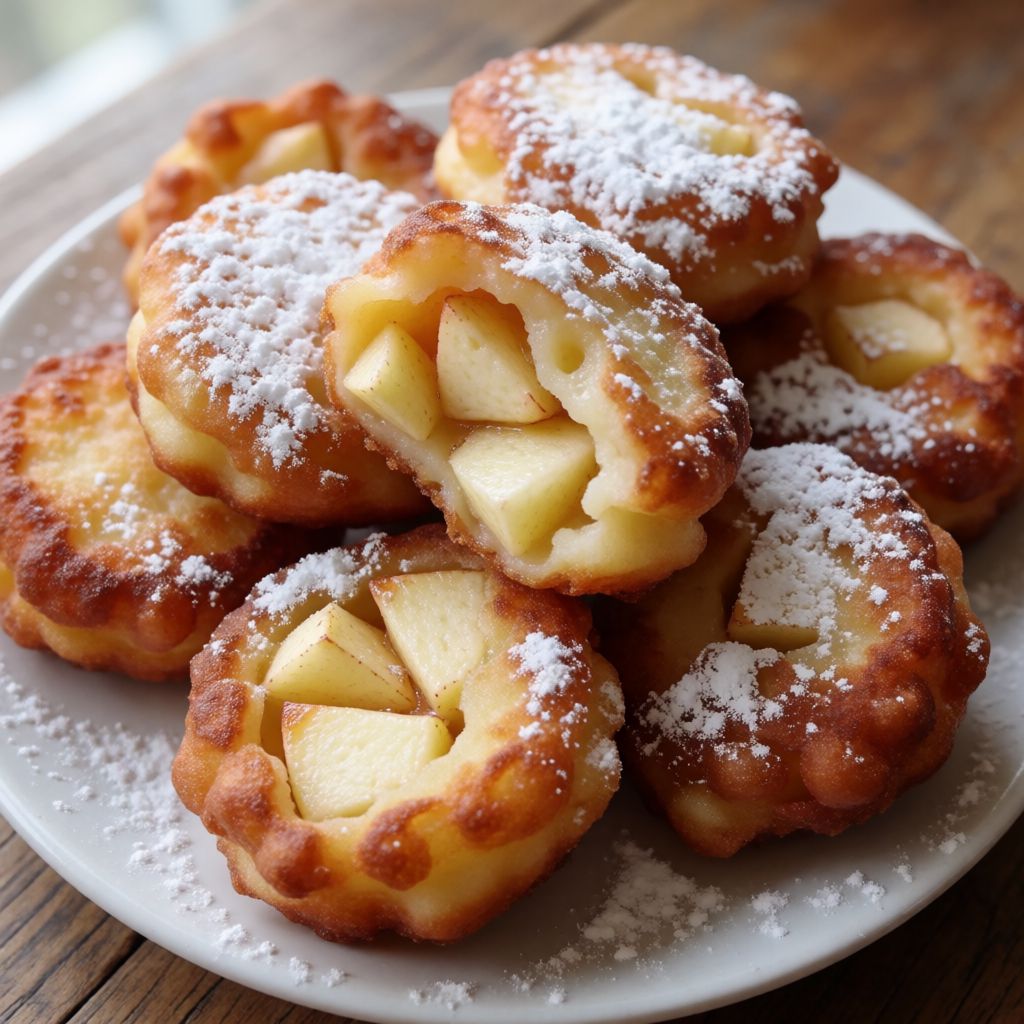
Soft apple rings dipped in a light vanilla batter, fried until golden and dusted with icing sugar.
Labels are worked out automatically from the ingredients and can be wrong. Check the packaging if it matters to you.
Ingredients
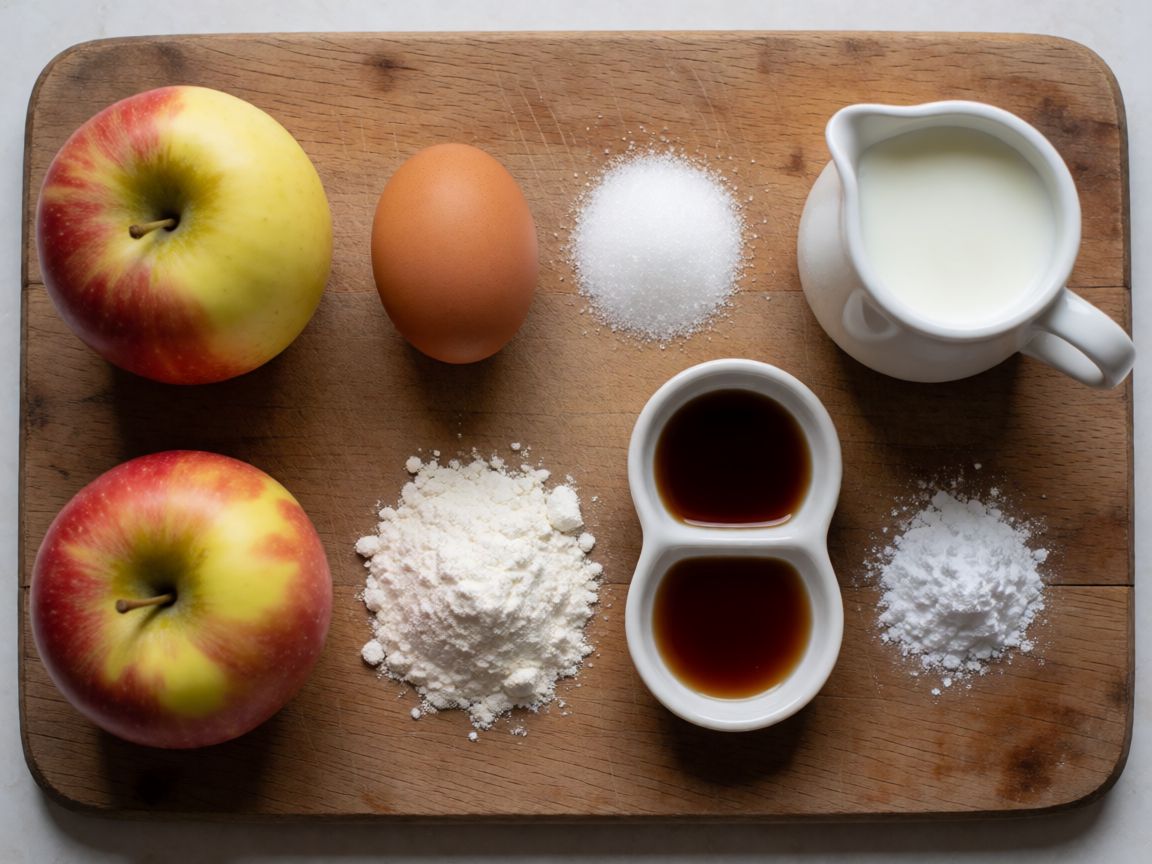
- 2 pcs Apples about 350 g
- 1 pcs Egg
- 20 g Caster sugar
- 130 g Plain flour
- 130 g Milk
- 1 tsp Vanilla extract
- 1 pinch Salt
- Vegetable oil for frying
- Icing sugar for dusting





Steps
In a bowl, combine the egg yolk with the sugar and whisk with a mixer until creamy.
Gradually add the sifted flour and milk, alternating between the two, until the batter is smooth.
Add the vanilla extract and a pinch of salt, and mix well.
Whisk the egg white to stiff peaks and gently fold it into the batter.
Cover the batter and leave it in the fridge.
30 minWash and peel the apples, then cut them into rings about 1 cm thick, removing the core.
Dip each apple ring into the batter using kitchen tongs.
Heat the oil for frying to about 170°C.
Fry the battered apple rings on both sides until golden.
Place the finished fritters on a kitchen towel or paper towels.
Dust with icing sugar and serve warm.
An apple fritter is a doughnut that's pretending to be fruit — a ring of apple doing the job a hole usually does, holding the batter in a thin, even layer so it cooks through before it burns. Everything about this recipe is really about that one problem: how do you get crisp batter and soft, warm apple at the same moment, without one finishing before the other.
That's why the apple is sliced into rings about a centimetre thick and not, say, wedges or a whole peeled apple dropped in. A wedge has a thick end and a thin end — the thin end turns to mush while the thick end is still raw in the middle. A ring is the same thickness all the way round, so it cooks evenly, and the hole left by the core becomes a window for heat, letting the middle of the ring soften at roughly the same rate as the batter crisps on the outside.
What decides whether this works isn't the apple at all, though — it's the batter, and specifically whether you treat the egg white as an ingredient or as an afterthought. Whisked separately to stiff peaks and folded in gently at the end, it's what makes the coating light rather than doughy — thousands of tiny air pockets that puff and set in the hot oil instead of a flour-and-milk paste that just soaks up oil and sits heavy. Fold it in carelessly, beat it back down, and you've thrown away the one thing separating a fritter from a pancake wrapped round an apple.
Apples: about 350g for two apples, so you're looking at fairly standard-sized eating apples, not the huge ones sold for baking whole. You want something that holds its shape when heated and has enough tartness to cut through the sugar and oil — a Granny Smith or a Bramley-adjacent firm apple works better than a soft, sweet one that'll collapse into sauce the moment it meets hot fat. If all you've got is something soft and mealy, slice it slightly thicker than a centimetre to buy it a little structural integrity, and expect a softer bite.
The egg does two jobs here, which is why it's split. The yolk goes in early with the sugar and gets whisked until it pales and thickens slightly — that's not decoration, that's starting to dissolve the sugar and build a bit of body before the flour arrives, so you don't end up with gritty batter. The white is saved and whipped separately for the air it holds, as above. If you're out of eggs or avoiding them, you lose some richness and the lift gets harder to replace — a small splash of sparkling water added right before frying is the honest substitute, not a miracle one, but it adds bubbles where the egg white would have.
Flour and milk going in alternately, bit by bit, is just insurance against lumps — tip all the flour in at once against liquid egg and sugar and you get pockets of dry flour that never properly hydrate, which show up later as little white specks of raw batter clinging to your fritter. Plain flour is right here, not self-raising — you don't want a cakey rise, you want a batter that clings thin and crisps; if self-raising is all you have, it'll still work, just puffier and a touch less crisp.
The fridge rest matters more than it looks like it should. Half an hour lets the flour's gluten relax and fully absorb the milk, so the batter coats smoothly instead of sliding off in patches — rush this step and you get thin spots on the apple ring that burn while the thick spots stay pale.
170°C is the number that matters most in the whole method, and it's worth having a thermometer or at least a test-drop of batter for it, since a domestic hob doesn't give you the steady, high-volume heat of a deep fryer — a small pan of oil cools fast the moment you drop something cold into it. Too cool and the batter soaks up oil like a sponge before it sets, leaving you with something greasy and pale; too hot and it colours in seconds while the apple inside stays crunchy and cold. Test with a small spoonful of batter: it should bubble up around the edges straightaway and turn golden in well under a minute, not sizzle violently or sit there sullenly. Any neutral oil with no smell of its own — sunflower, groundnut, a plain vegetable oil — will do; olive oil's flavour has no business here and its lower smoke point works against you.
Paper towels or a clean tea towel underneath when they come out isn't fussiness, it's the difference between crisp and soggy — fritters sitting in their own oil on a plate go soft from the bottom up within minutes. Icing sugar goes on once they've lost a little heat, otherwise it just melts into a wet glaze instead of sitting as a dusting. This makes enough for four, and it's a dish best eaten standing at the stove while the next batch fries, not one that waits well on a tray for everyone to sit down.