
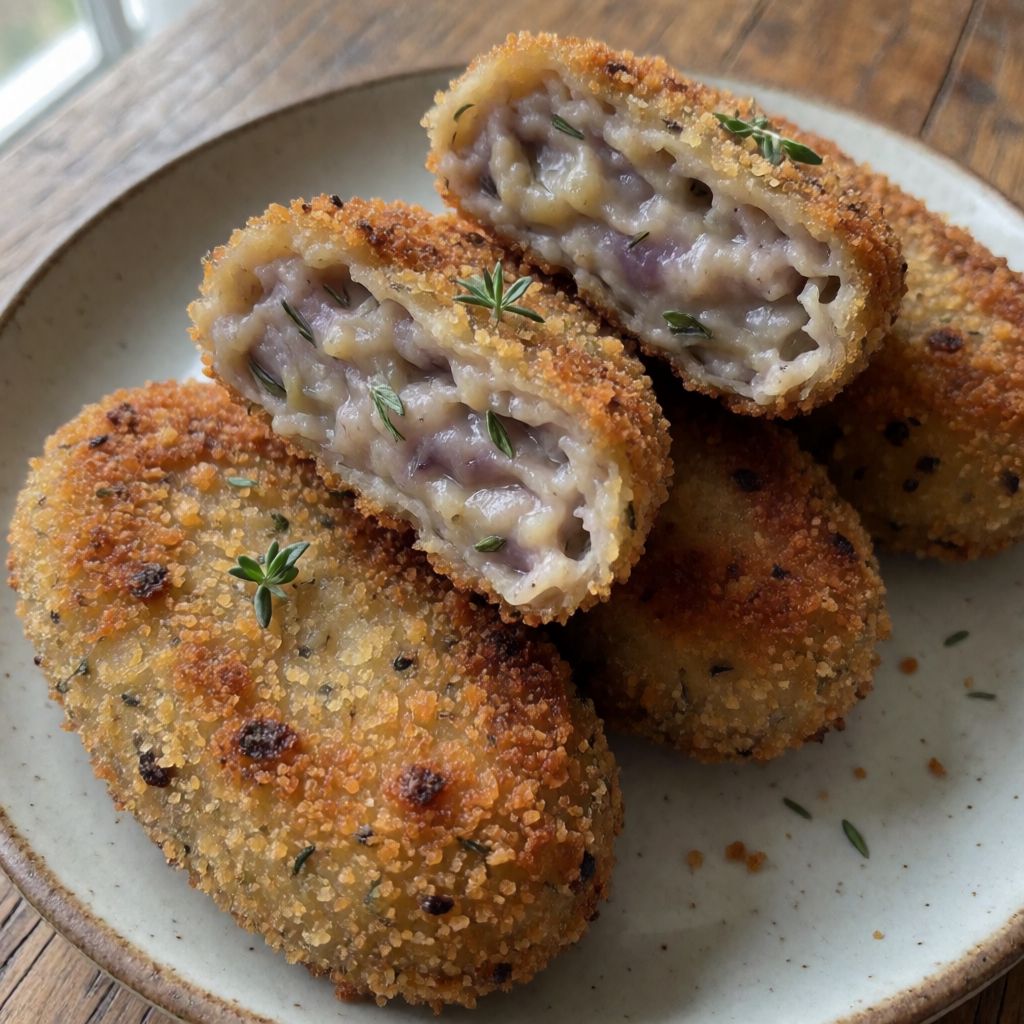
 AI photo
Aubergine Croquettes
Crisp fried aubergine croquettes with a melting mozzarella centre, mixed with parmesan and thyme.
Labels are worked out automatically from the ingredients and can be wrong. Check the packaging if it matters to you.
Ingredients
- 900 g Aubergine
- 150 g Breadcrumbs dried
- 1 pcs Egg
- 60 g Parmesan
- Thyme to taste
- 80 g Mozzarella
- Salt to taste
- Black pepper to taste
- Olive oil to taste
- Peanut oil for frying


Steps
Wash and peel the aubergines with a vegetable peeler, then cut them into cubes.
Heat olive oil in a frying pan, add the aubergine cubes and cook gently with the lid on.
15 minTransfer the aubergines to a blender and blitz to a thick, creamy mixture.
Pour the mixture into a bowl, add the egg and the breadcrumbs.
Add the parmesan and the thyme leaves.
Season with salt and pepper and mix well.
Shape the croquettes: take a spoonful of the mixture, place a cube of mozzarella in the centre and form into a classic round shape.
Coat the croquettes in breadcrumbs.
Fry the croquettes in plenty of hot peanut oil, turning occasionally, until golden brown.
Place the cooked croquettes on a paper towel to drain excess oil, and serve while still hot.
This is aubergine playing the part of potato — the vegetable gets cooked down to a soft mash, bound with egg and cheese, wrapped around a hidden core of mozzarella, and fried until the outside sets hard and the inside goes molten. It's a croquette only in shape; the filling is where the real decision gets made, because aubergine on its own is watery and bland, and the whole dish stands or falls on whether you drove that water out before it ever got near the breadcrumbs.
What decides it: the aubergine must be cooked low and slow with the lid on, not fried hard. Aubergine flesh is mostly air pockets and water held in a spongy structure — blast it on high heat and the outside scorches and turns bitter (that's the compound that gives raw aubergine its sharp edge) while the inside stays firm and raw. Gentle heat with a lid lets steam do the work from both sides: the flesh collapses, softens, and gives up its water slowly enough that it doesn't just seize and char.
The second decision point is the breadcrumb coating, and this is where a lot of croquettes fail quietly — not at the frying, but at the shaping. If the aubergine mixture is still wet when you fold in the crumbs and egg, the croquette won't hold its shape in the oil; it'll weep, soften, and eventually crack open before the crust has had time to go golden. So the blended aubergine needs to look thick — like a stiff hummus, not a sauce — before anything else goes in.
On the aubergine itself: buy it heavy for its size and glossy-skinned, with no give when you press a thumb into it — a soft spot means air pockets gone soft and bitter inside. Peeling it matters here, not for looks but for texture: the skin doesn't soften the way the flesh does, even under a lid, and if you leave it in, the blender just chops it into tough little flecks that sit oddly in an otherwise smooth mash. If you're doing this in an ordinary British kitchen with a standard hob, use the widest pan you've got and keep the lid actually on — a plate balanced over the pan works almost as well if your lid doesn't fit, since the point is trapping steam, not sealing a vacuum.
The egg is the binder, nothing more romantic than that — it's what lets the breadcrumb and parmesan and aubengine mash hold together as a solid rather than crumbling apart the moment it hits hot oil. One egg for 900g of aubergine is already a lean ratio, so don't skip it hoping to save calories; the croquette will simply fall apart in the fryer, and you'll end up with aubergine soup and regret.
Breadcrumbs do two jobs and you use them twice for a reason. Inside the mixture, they're there to soak up the last of the aubergine's moisture and give the mash enough body to hold a shape in your palm. On the outside, they're the actual crust — the layer that goes from pale to deep gold in the oil and gives you something crisp to bite through before you reach the soft centre. Dried breadcrumbs, not fresh, because fresh ones carry their own moisture and won't crisp cleanly; if you're out, a packet of panko works, and it actually crisps a touch better due to its coarser, drier crumb.
Parmesan goes into the mash for salt and savour you can't easily get otherwise — it's doing a seasoning job, not a melting one, since by the time it's in the aubengine mixture it never gets hot enough on its own to go stringy. Any firm, aged, salty hard cheese stands in for it — a mature cheddar will do, though it'll shift the flavour toward something more British and less Italian, which isn't a crime.
Mozzarella is the opposite logic entirely: it's chosen purely for how it melts, not how it tastes — mild, stretchy, forgiving under heat. Use the firmer block mozzarella meant for cooking rather than the wet ball sold in brine for salads; the wet kind carries extra liquid that'll weep out as it melts and can split your croquette from the inside.
On the oils: olive oil for cooking the aubengine because you want some flavour contributed at that stage, and peanut oil for frying because it has a high smoke point and almost no taste of its own — it won't fight with the aubengine or the cheese, and it holds up under the heat frying actually needs without burning. Any neutral oil with a high smoke point and no personal opinion on flavour will do the same job — sunflower or a plain vegetable oil, if peanut's not in the cupboard, though skip it if anyone eating has a nut allergy, obviously.
Last thing, and it's not optional: patience with the frying temperature. Oil that's not hot enough soaks into the crumb before it crisps, leaving you a soggy, greasy shell instead of a crust; oil that's screaming hot chars the outside before the cheese inside has had time to melt. There's no thermometer reading given in this recipe and I won't invent one — go by the cue instead: a small pinch of the raw mixture dropped in should fizz and colour steadily, not sit there doing nothing, and not instantly blacken at the edges. Get that right and everything else follows.