
 AI photo
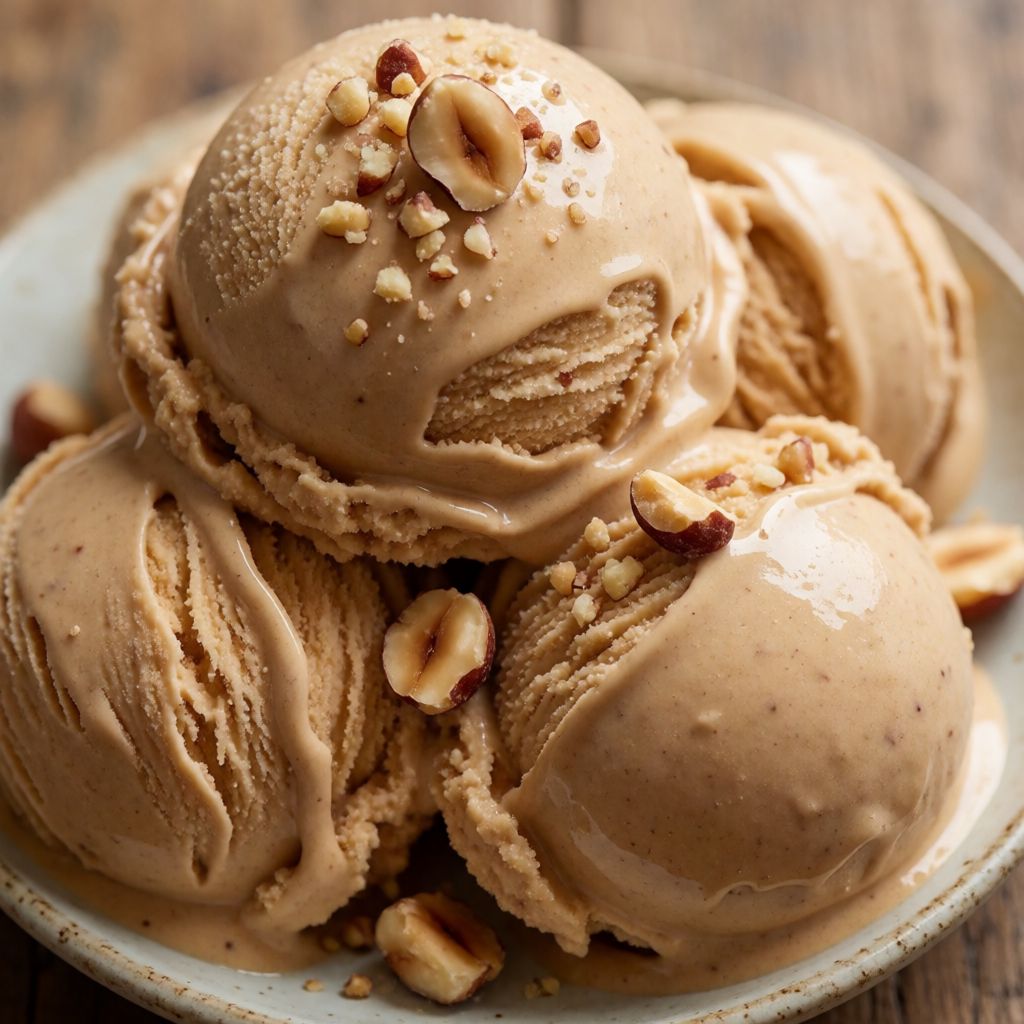
Hazelnut Ice Cream
A rich hazelnut ice cream made with a classic custard base.
Labels are worked out automatically from the ingredients and can be wrong. Check the packaging if it matters to you.
Ingredients




Steps
Toast the hazelnut kernels in the oven at 175°C fan until the skins crack, about 10 minutes.
10 minWrap the nuts in a clean cloth and rub off the skins completely.
Grind the warm hazelnut kernels in a food processor to a fine hazelnut flour.
Slowly heat the hazelnut flour, milk and salt in a saucepan to 90°C, stirring.
Remove the pan from the heat and blend the mixture with a stick blender.
Strain the mixture through a sieve into a bowl and set the hazelnut milk aside.
Whisk the egg yolks with the sugar until pale and fluffy.
Heat the double cream, milk chocolate and hazelnut milk in a saucepan almost to the boil.
Slowly pour the hot milk mixture into the bowl with the egg mixture, stirring, then pour everything back into the saucepan.
Heat, stirring, until the temperature reaches exactly 80°C — check with a cooking thermometer.
Chill the hazelnut custard in the fridge for 1 hour or overnight, then churn in an ice cream maker to the desired consistency.
60 minPut the ice cream in the freezer for 2 hours before serving.
120 min
This isn't a vanilla ice cream with nuts thrown in. It's an ice cream where the hazelnuts replace most of the dairy fat in doing the work — you cook raw nuts into their own "milk", and that nut milk, not the cream, carries the flavour right through the custard. Skip that step and make a nut-flavoured cream instead, and you'll taste cream with a hint of hazelnut, not hazelnut with a hint of cream. The order here is the recipe.
What decides whether it works is control of two temperatures, both low, both unforgiving. First, toasting at 175°C just long enough that the skins split — not to brown the nut deeply, but to loosen a bitter, papery skin that would otherwise sit in your ice cream like grit. Second, the custard at exactly 80°C, no higher. Egg yolks start to set around 70°C and are fully scrambled by 85°C; 80°C is the narrow band where the yolk proteins thicken the cream into custard without curdling it into sweet omelette. A thermometer isn't fussiness here — it's the only honest way to know, because by sight and feel the line between "coats the spoon" and "scrambled" is a few seconds wide, and your hob doesn't care about your dinner party.
Some say you can skip the sieve. No — because grinding nuts, however fine, leaves grit and skin fragments a blender can't dissolve, and that grit is the difference between velvet and sand on the tongue. The sieve isn't ceremony, it's quality control.
Hazelnuts: buy them raw and whole, skin on, and toast them yourself — pre-roasted shop nuts have already lost the volatile oils that give the "fresh hazelnut" smell, and skinning is far easier warm, straight from the oven, than cold, because the heat dries and lifts the skin from the kernel. The cloth-rubbing step isn't folklore, it's friction: skin against cloth fibres, nothing fancier. If you've no clean tea towel to spare, a few sheets of paper towel rubbed between your palms over a bowl does the same job.
The hazelnut milk is the engine of the dish. Heating the ground nuts in milk to 90°C extracts their oil and flavour into the liquid the way you'd infuse tea — hot enough to open the cell structure, not hot enough to scald the milk's own proteins into a skin. Blending afterwards breaks the nuts down further so the straining actually yields something, rather than you squeezing a dry paste through muslin for twenty minutes.
Egg yolks and sugar whisked together first, before any heat touches them, because sugar grains dissolving slowly into raw yolk is what gives you "pale and fluffy" — sugar crystals cutting into the yolk's structure, incorporating air. Do this step badly, whisk too little, and your custard base will be thinner-bodied and more prone to tiny curdled flecks later, because the yolk proteins weren't properly separated and cushioned by sugar before they met heat.
Milk chocolate in a custard mix feels, at first, like gilding. It isn't — it's there for fat and cocoa solids both, rounding the hazelnut's slightly dry, tannic edge with something creamier and a touch bitter. If you only have dark chocolate in the cupboard, use less — 35–40g rather than 50g — and perhaps a touch more sugar, since dark chocolate's bitterness will otherwise fight the nut rather than support it.
Double cream here isn't optional for richness's sake — in UK terms, it's the only cream with enough fat (48%+) to churn into something with body rather than ice shards. Whipping cream or single cream will freeze harder and icier, because there's less fat to disrupt ice crystal formation. If a dairy-free version is the goal, you're really building a different recipe — coconut cream can replace it, but it brings its own flavour loudly enough to compete with the hazelnut, so treat it as a different dish, not a substitution.
An ice cream maker matters more than any other piece of kit on this list — not for show, but because churning is what beats air in and keeps ice crystals small while the custard freezes. Without one, you can still get there: freeze the custard in a shallow dish and beat it with a fork every 30 minutes for the first two or three hours, breaking up crystals by hand instead of by machine. Slower, rougher result, but not a failure — just more patience spent at the freezer door instead of watching a bowl rotate.