
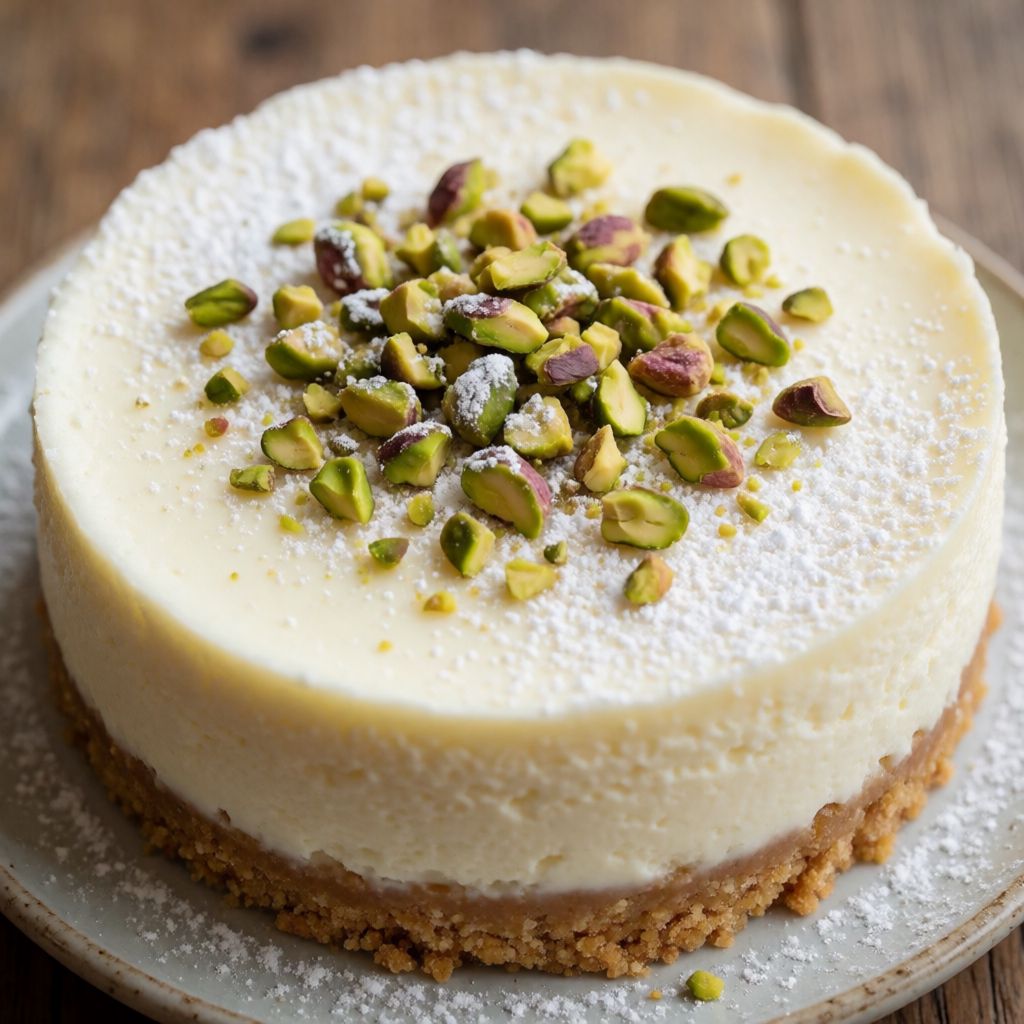
 AI photo
Pistachio Cheesecake
A creamy no-bake pistachio cheesecake with a buttery biscuit base and white chocolate.
Labels are worked out automatically from the ingredients and can be wrong. Check the packaging if it matters to you.
Ingredients
- 200 g Biscuits
- 120 g Butter
- 120 g Shelled Unsalted Pistachios
- 120 g Icing Sugar
- 100 g White Chocolate
- 30 g Butter
- 50 g Milk
- 150 g Double Cream
- 250 g Ricotta
- 250 g Cream Cheese
- 8 g Gelatin








Steps
Crush the biscuits in a blender and combine with the melted butter. Transfer the mixture into a 22 cm tin lined with baking paper and smooth it out with a spoon.
Put the tin in the fridge.
Simmer the pistachios in boiling water for 10 minutes.
10 minDrain the pistachios and tip them onto a kitchen towel, rubbing them to remove the skins. Transfer to a blender and blitz with the icing sugar until you get a thick, smooth paste.
Over low heat, melt 30 g of butter together with the milk and chopped white chocolate. Add the pistachio paste and stir until smooth. Pour the mixture into a container and chill.
Soak the gelatin in cold water; once softened, squeeze it out and dissolve it in 50 g of warm double cream.
In a large bowl, beat the cream cheese and ricotta with an electric mixer, then add the chilled pistachio mixture and mix thoroughly.
Whip the remaining double cream and gently fold it into the mixture. Pour in the dissolved gelatin and stir.
Spread the finished filling over the biscuit base and smooth with a spatula.
Chill in the fridge for at least 3 hours.
180 minBefore serving, decorate with crushed pistachios if you like.
This is a no-bake cheesecake, which tells you straight away what decides the outcome: not an oven, but a fridge, and fridges are slow and merciless. There's no flour, no egg, no baking - the whole structure stands on butter that re-solidifies in the base and gelatin that sets in the filling. Get either wrong and you don't get "a bit soft", you get soup with biscuit crumbs in it.
The base is biscuit crumb bound with melted butter - essentially a cold version of pastry, where butter does the job flour and heat would normally do. Press it too loosely and it crumbles when you lift a slice; press it to a slab and it turns into a layer of compacted gravel under your fork. A flat-bottomed glass, pushed down firmly, does more good here than any spoon.
The filling is really two things married together: a pistachio paste (the flavour and colour) and a dairy base of ricotta, cream cheese and whipped double cream (the body). Ricotta on its own is loose and grainy; cream cheese on its own is dense and a bit flat. Together, one lightens the other. Whipped cream folded in at the end isn't decoration - it's air, and air is what keeps a cold-set cheesecake from eating like cold butter.
What actually makes or breaks this one is the gelatin: too little and the cake never holds a clean slice, too much and it goes rubbery, more jelly than cheesecake. Bloom it properly, dissolve it in warm (not hot) cream, and mix it in before the whipped cream fully deflates - that's the whole trick.
Biscuits (200g) - digestive-style biscuits are the obvious choice in a British kitchen, and they're right for this: enough fat already in them to crumble finely, enough sugar to not need extra. Any plain, dry sweet biscuit works on the same logic - the test is "does it crush to sand, not paste" in the blender. Ginger nuts would push the flavour somewhere else entirely, which isn't a fault, just a different cake.
Butter (120g for the base) - its only job is to go from melted to solid again in the fridge, gluing crumb to crumb. Butter that's too warm when you mix it makes a base that's greasy and never quite sets hard; cold lumps of butter make a patchy one. Melt it gently and mix it through while it's still properly liquid.
Pistachios (120g) - the whole character of the cake depends on buying ones labeled "unsalted, shelled" and nothing else; salted or roasted pistachios will fight the sugar and the dairy. The boiling-and-rubbing step isn't a flourish - it's how you get the skins off without peeling each nut by hand, because that skin is bitter and turns the paste a dull khaki instead of the bright green you're after. Istanbul and Sicily produce the cheapest good ones in UK shops; if pistachios are out of budget, you can swap for toasted blanched almonds or pine nuts, but call it what it is then - an almond cheesecake, not pistachio.
White chocolate (100g) and icing sugar (120g) - between them they carry all the sweetness, since neither ricotta nor cream cheese brings any. White chocolate also brings fat and a bit of body when melted with the butter and milk, which is what lets the pistachio paste blend smoothly instead of sitting as grit. If you can't get white chocolate, you lose some silkiness, but a bit more icing sugar and a splash more cream gets you close.
Ricotta (250g) and cream cheese (250g) - this is a British substitution worth naming directly: full-fat cream cheese (Philadelphia-type) stands in fine for Italian mascarpone or a firmer Turkish lor, and ricotta from the chiller cabinet works as well as fresh market ricotta here, since it's all getting whipped and mixed rather than eaten plain. Don't reach for low-fat versions of either - less fat means less structure, and structure is exactly what you're short of in a cake with no flour and no heat.
Gelatin (8g) and double cream (150g, split) - gelatin needs cold water to bloom (soak) in, not warm, or it goes stringy and never fully dissolves; then it needs warm cream, not hot, to melt into, because above a certain heat gelatin's setting power breaks down and no amount of fridge time brings it back. This is the one step where a thermometer is more useful than a guess - warm like bathwater, not warm like tea. The remaining cream gets whipped separately and folded in gently at the end; "gently" matters because knocking the air back out of whipped cream is how a filling that should be light ends up dense and slightly rubbery instead.
Three hours in the fridge is the minimum, not the target - gelatin sets on its own schedule, and a domestic fridge, opened and closed all day for milk and butter, runs warmer than you think. Overnight is kinder to the cake and to you: less chance of cutting into it too early and watching a slice slump sideways on the plate.