
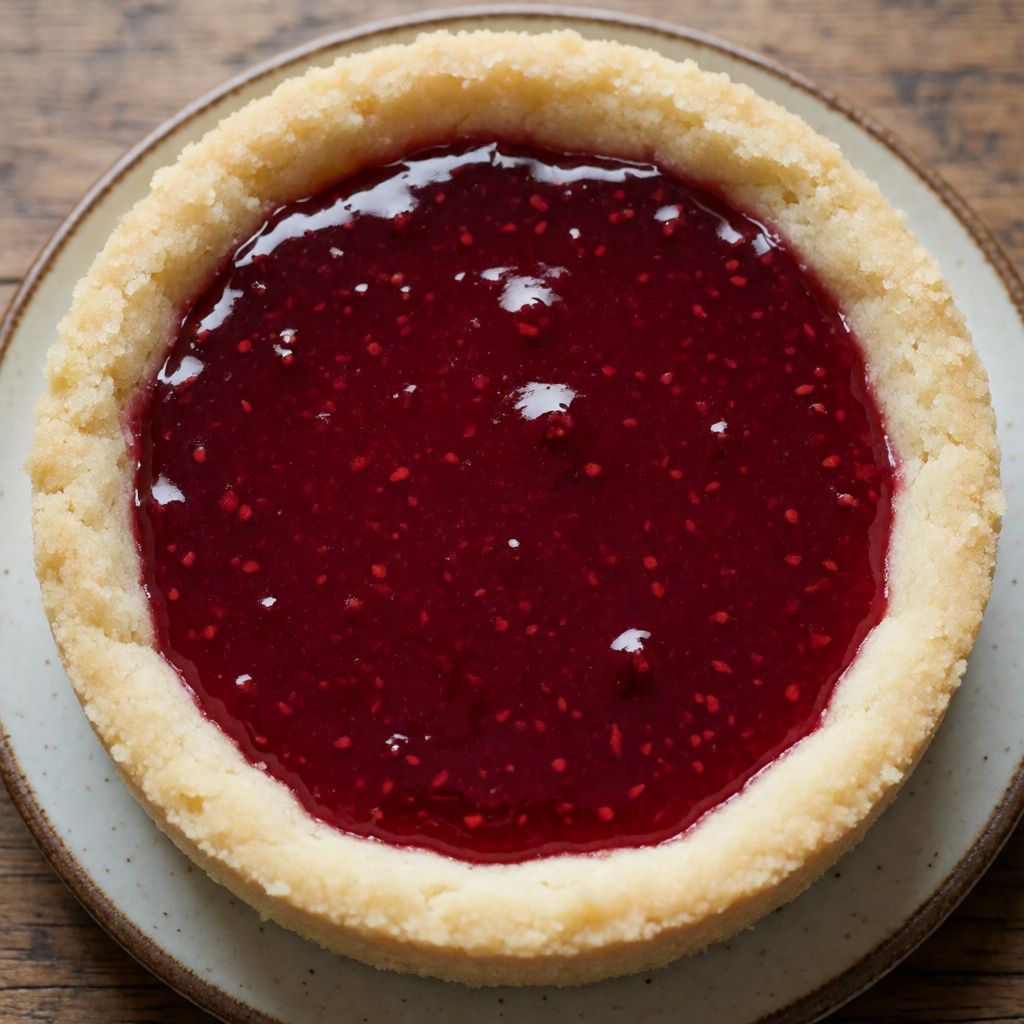
 AI photo
Gluten-Free Raspberry Jam Tart
A gluten-free tart with a buttery rice flour pastry, filled with sweet raspberry jam.
Labels are worked out automatically from the ingredients and can be wrong. Check the packaging if it matters to you.
Ingredients
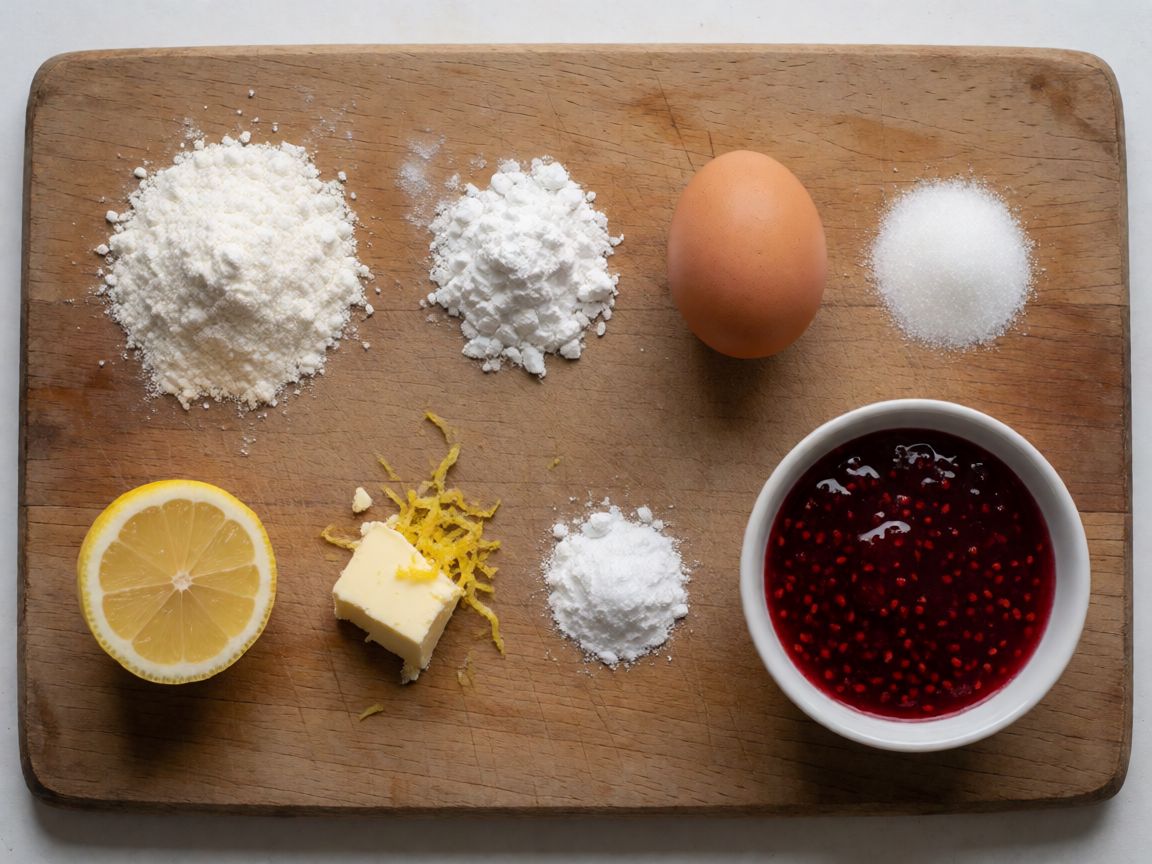
- 200 g rice flour
- 50 g potato starch
- 150 g sugar
- 1 pcs egg
- 150 g butter cold
- 8 g baking powder
- 1 pcs lemon zest
- 450 g raspberry jam







Steps
In a large bowl, combine the rice flour and potato starch, then add the egg, sugar, baking powder and lemon zest.
Add the cold butter, cut into cubes, and work the dough together by hand in the bowl.
Transfer the dough to a lightly floured surface and knead vigorously until you have a smooth, even ball.
Wrap the dough in cling film and chill in the fridge to rest for at least 1 hour.
60 minRoll out the dough with a rolling pin to a thickness of 4-5 mm.
Transfer the dough to a 22 cm tin, buttered and dusted with rice flour, pressing it up to the edges.
Prick the base with a fork and fill the tart with raspberry jam.
Roll out the leftover dough and cut shapes to decorate the top of the tart.
Bake the tart in an oven preheated to 180°C for about 30 minutes.
30 minAllow the tart to cool completely before serving.
This is a crostata, really — the Italian jam tart wearing a gluten-free coat. What decides whether it works isn't the jam, it's the pastry, and the pastry is decided by one thing: how cold the butter stays until the moment it hits the oven. Rice flour and potato starch have no gluten to hold anything together elastically, so the dough can't be saved by kneading the way wheat dough can. It's held by cold fat and starch gelatinising, full stop. Treat it rough, let it warm up, and it won't crack into neat shards when baked — it'll crumble into sand or, worse, slump and weep butter into the tin.
Some say gluten-free pastry is automatically more fragile and that's just the price of it. No — it's fragile if you skip the chill, because without gluten there's no elastic network to forgive a soft, overworked dough. The hour in the fridge isn't bureaucracy, it's the only thing doing the job gluten normally does: it lets the starches hydrate evenly and the butter re-firm into a solid lattice, so when heat hits it, the fat melts fast, leaves little pockets of steam, and you get short, sandy-crisp pastry instead of a biscuit that's gone leathery.
Rice flour gives you the bulk and a slightly sandy, clean bite — it's what stands in for wheat flour's structure, minus the stretch. Potato starch is there to soften that sandiness and help the pastry bind without gluten; it also helps the crust crisp rather than stay chalky. If you don't have potato starch, cornflour (cornstarch) does a similar job — same principle, a fine starch that gelatinises and binds, not a flavour ingredient, so don't reach for anything with its own taste.
The butter has to be cold, cubed, and handled briefly — that's not tradition for its own sake, it's physics. Warm butter smears into the flour and starch, coating them in fat before they can form a proper structure; cold butter stays as distinct lumps that, as they melt in the oven, leave gaps — that's your short, crumbly texture instead of a dense, greasy one. Any butter works, but it has to actually be cold from the fridge, not "room temperature, but it's a cool day."
The egg is binding, not enrichment — it's doing the job that gluten's elasticity would normally do in a wheat crust, giving the dough enough cohesion to roll and hold a shape. One egg for this amount of flour is enough; more and the dough turns tough and biscuity instead of short.
Baking powder here isn't for rise in the bready sense — there's no yeast, no proofing — it's just there to lighten the crumb a touch so the pastry isn't dense underfoot. Lemon zest is the one ingredient doing pure flavour work: it cuts the sweetness of 150 g sugar plus 450 g jam, which otherwise would sit flat and one-note. If you've no lemon, a few drops of orange zest or even a pinch of salt will do the same cutting job, just differently.
The jam is the filling and the point of the whole thing, and it should be a proper set jam, not a runny fruit compote — raspberry jam works because its pectin has already set it, so it holds its shape in the tin and doesn't boil over or soak into the pastry base. If raspberry isn't to hand, use any stiff, well-set jam — apricot, cherry, blackcurrant — the test is: does it hold a shape on a spoon, or does it run? Run, and it'll seep under your lattice and make the base soggy rather than crisp.
On an ordinary British hob-and-oven setup, this is straightforward — a 22 cm tin, a domestic oven at 180°C, nothing that needs a kazan or special kit. The one place to be honest about limits: ovens vary more than their dials suggest, so use the lattice colour, not the oven's number, as your real signal that it's done. And the hour's chill, like the full cool-down at the end — that's patience doing real work, not two optional pauses you can skip if you're in a hurry. Skip either and the tart will tell you.