
 AI photo
Gluten-Free Apple Cake
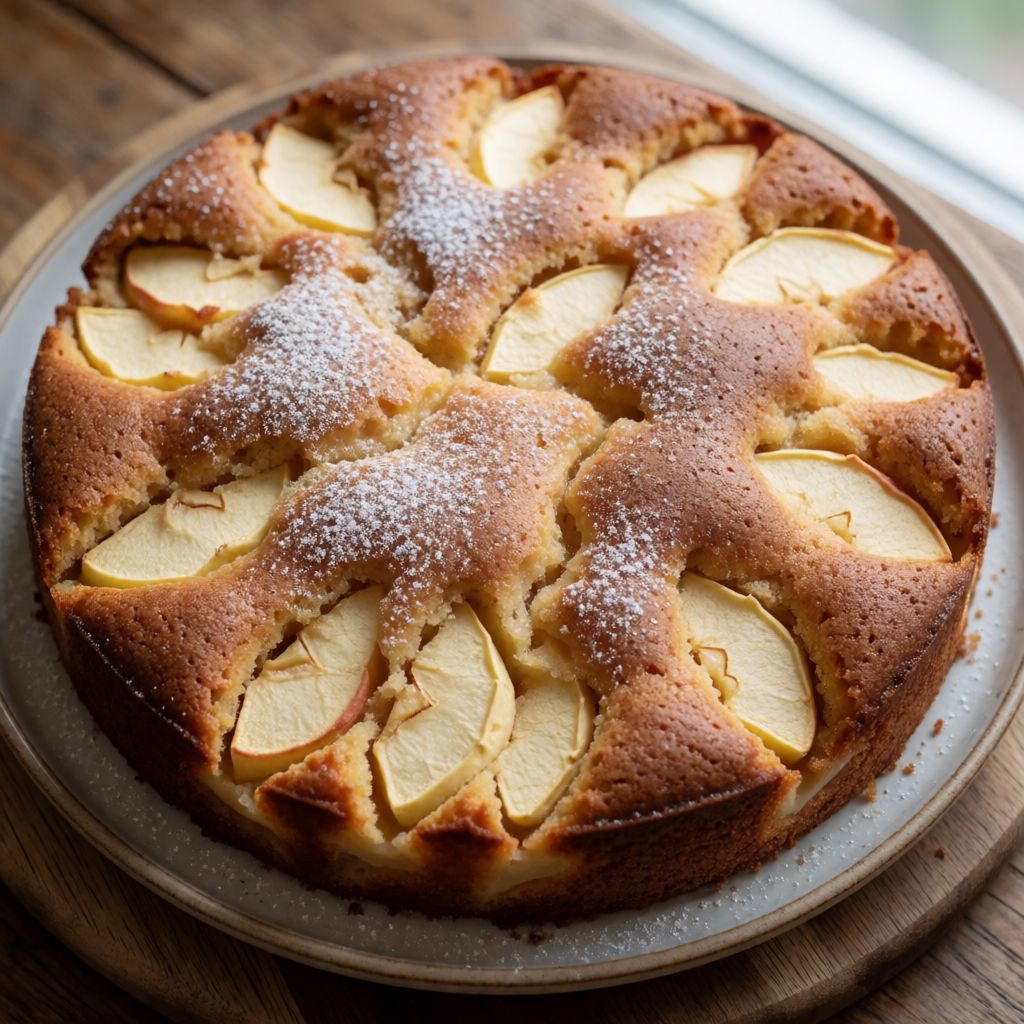
A gluten-free apple cake, light and simple, finished with icing sugar and cinnamon.
Labels are worked out automatically from the ingredients and can be wrong. Check the packaging if it matters to you.
Ingredients
- 3 pcs Apple
- 120 g Eggs
- 130 g Caster sugar
- 1 tsp Vanilla extract
- 1 pcs Lemon zest
- 50 ml Vegetable oil
- 50 g Double cream
- 70 g Milk
- 150 g Rice flour
- 50 g Cornflour
- 16 g Baking powder
- Icing sugar to taste
- Cinnamon to taste











Steps
Crack the eggs into a bowl and whisk with a mixer with the sugar, vanilla extract and lemon zest for a few minutes
Pour in the vegetable oil in a thin stream, whisking all the while
Sift the rice flour, cornflour and baking powder and gradually add to the egg mixture
Alternately add the double cream and milk until the batter is smooth
Pour the batter into a greased tin and level the surface
Slice the apples and arrange them in a fan over the batter
Decorate with icing sugar and cinnamon
Bake in a preheated oven at 180°C
40 minRemove from the oven and let cool
This is a flat, dense apple cake built without a single gram of wheat — and the two flours in it aren't there by accident. Rice flour has no gluten to speak of, so on its own it bakes into something sandy and crumbly, closer to shortbread than cake. Cornflour is pure starch, almost no protein, and what it brings is bind — it swells with the liquid and holds the crumb together without the elastic, chewy structure gluten gives. Together they fake a "normal" cake texture; neither one alone would get you there.
What decides whether this works is the egg-and-sugar whisk at the start. You're not just dissolving sugar — you're beating air into the eggs until they go pale and thick enough to hold a ribbon when you lift the whisk. That air is doing the job baking powder can't do alone, because without gluten there's no stretchy net to trap gas bubbles and grow with them. Skip the whisking, rush it, and the 16g of baking powder — which is a lot, and that's the tell — has to work twice as hard, and you still end up with a cake that sits heavy and doesn't rise evenly.
Some say gluten-free baking is just "normal baking minus the wheat." No — because gluten isn't a flavour you're removing, it's the scaffolding that holds a cake up while it bakes and keeps it elastic after. Take it away and you have to build that scaffolding back some other way: here it's whipped egg, starch, and a heavier dose of baking powder standing in for a structure that usually builds itself.
On the eggs and sugar: 120g eggs is roughly two medium British eggs — weigh them if you can, because this is a recipe where ratios matter more than usual, since there's no gluten to forgive a slightly wetter or drier batter. Whisk until the mixture is pale, thick, and leaves a visible trail when the whisk lifts out — that's the only real signal, "a few minutes" is a lower bound, not an instruction to watch the clock.
Rice flour: use fine rice flour, not the gritty stuff meant for dusting work surfaces — grind size changes how much liquid it absorbs and how sandy the final crumb feels. If you can't find it, a fine ground-almond-and-cornflour mix gets closer than wheat flour ever will, because the goal is something with no gluten network, not something that merely tastes neutral. Cornflour here is doing starch's job specifically — thickening and binding — so don't swap it for more rice flour; you'd lose the bind and get crumbly cake.
Vegetable oil, not butter: oil stays liquid at room temperature, so the cake stays moist and soft the next day instead of firming up as cold butter does when it resets. "Any oil with no smell of its own" is the real criterion — sunflower, rapeseed, light olive oil all work; something like extra virgin olive or walnut oil will fight the lemon zest and vanilla for attention.
Double cream and milk together give you fat and liquid in roughly the right ratio without the batter going thin — cream alone would be too heavy and stiff to fold in evenly, milk alone wouldn't carry enough fat to keep the cake tender once the starches set. Adding them alternately with the dry mix, rather than all at once, is just about avoiding lumps — rice and cornflour clump fast in a wet batter if you dump liquid in carelessly, and lumps don't dissolve later in the oven, they bake in.
Lemon zest and vanilla aren't flavour decoration so much as correction: gluten-free bakes can taste slightly flat or "starchy" on the finish, and zest's sharpness plus vanilla's roundness cover that gap. Use real zest, finely grated, not the dried stuff — dried zest is mostly bitter pith by the time it's packaged and won't lift anything.
On the tin and oven: you don't need a kazan or anything special — a normal round cake tin, greased properly so nothing tears when you turn it out later. An ordinary UK oven at 180°C fan or 200°C non-fan (check which yours defaults to) gets you there; 40 minutes is the lower bound again — the cake is done when a skewer comes out without wet batter clinging to it and the top springs back rather than leaving a dent. Let it cool properly before dusting with icing sugar and cinnamon — do it hot and the sugar just melts into the surface and vanishes, no contrast, no point.