
 AI photo
Baked Potato and Cheese Gattò
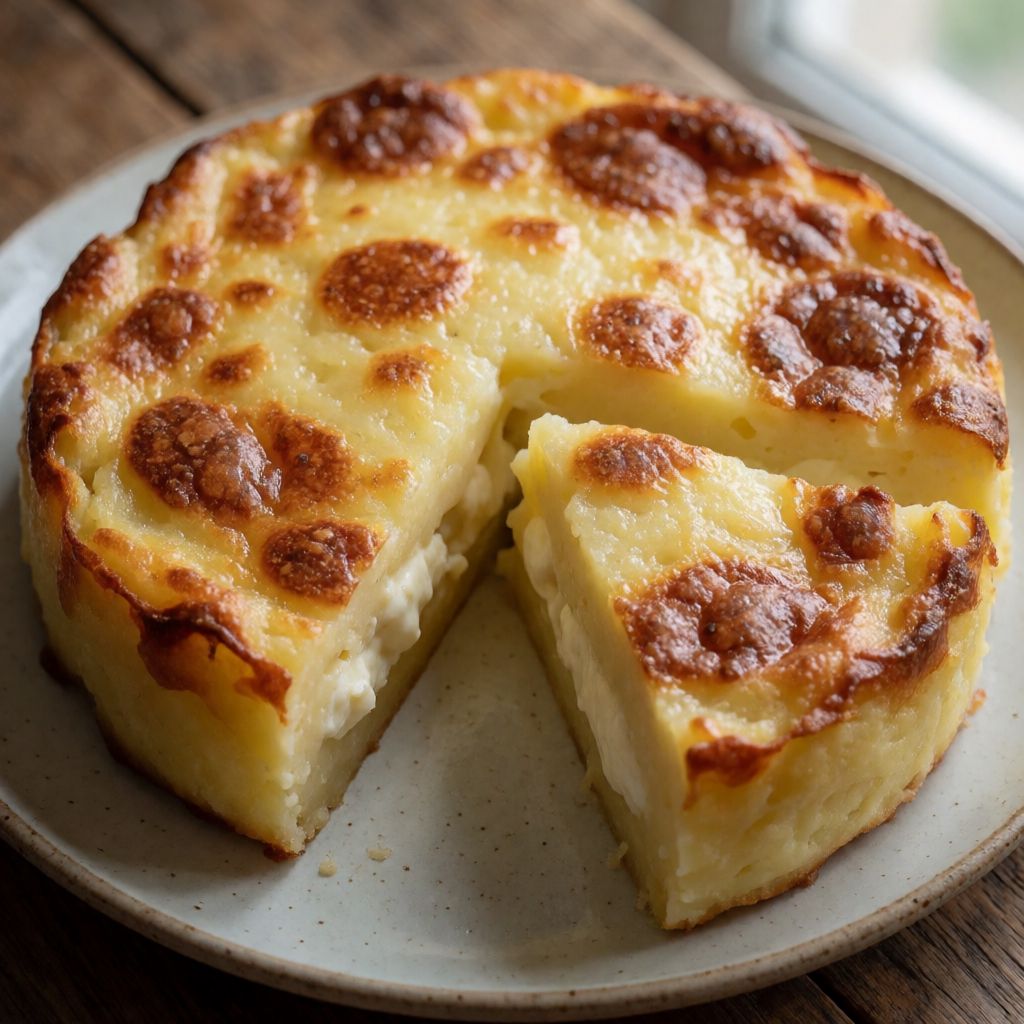
A baked gattò of mashed potato combined with melting cheeses, finished with parmesan until golden.
Labels are worked out automatically from the ingredients and can be wrong. Check the packaging if it matters to you.
Ingredients
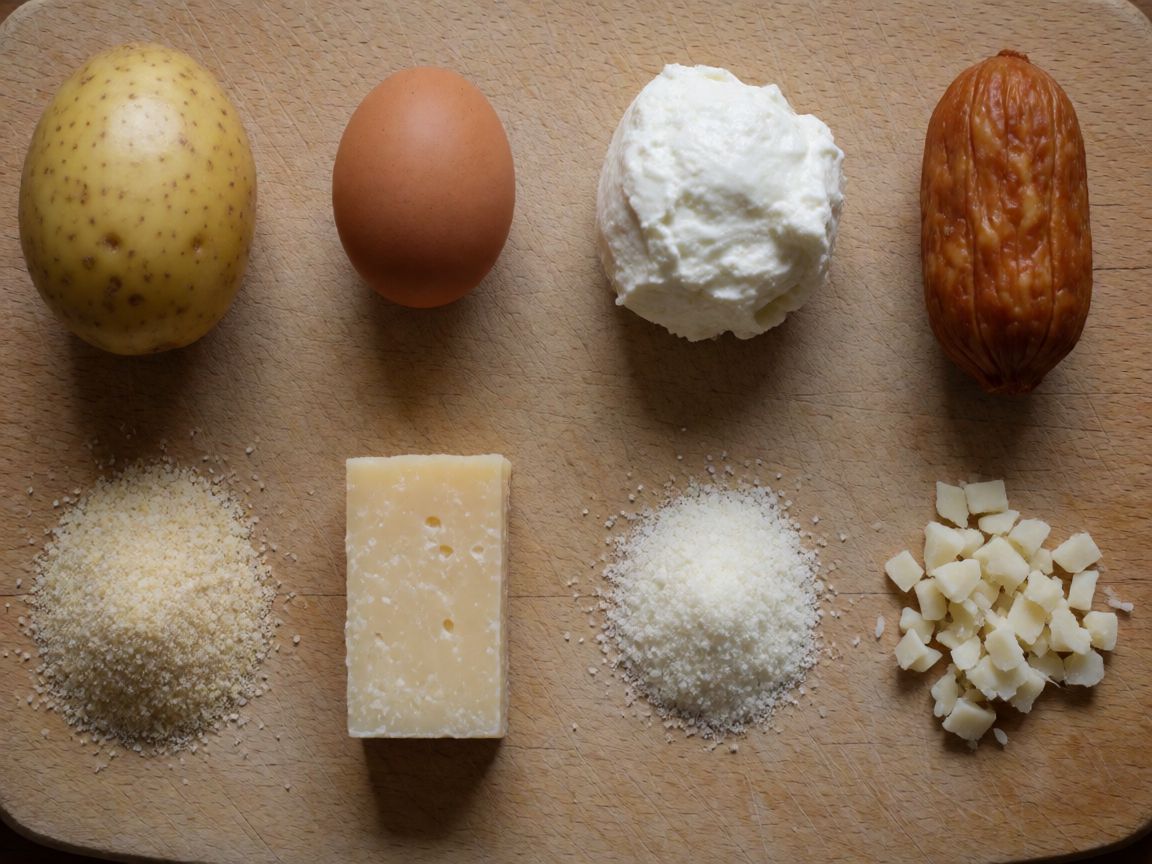
- 1 kg Potatoes
- 2 pcs Eggs
- 160 g Mozzarella
- 150 g Smoked scamorza or smoked cheese
- Olive oil to taste
- 70 g Parmesan
- Breadcrumbs to taste
- Salt to taste
- Black pepper to taste







Steps
Wash the potatoes and boil in a wide pot, fully covered with water, for at least 45 minutes until tender.
45 minPrepare the mozzarella: drain off the liquid, cut into small pieces and leave in a colander.
Drain the cooked potatoes, let cool and peel them.
Press the potatoes through a ricer into a large bowl.
Add the eggs, salt and black pepper to the mashed potato and mix well.
Add the mozzarella and the diced scamorza, and mix until smooth.
Grease a rectangular baking dish with olive oil and dust with breadcrumbs.
Spread the potato and cheese mixture into the dish, levelling it with a spoon or spatula.
Sprinkle parmesan on top and bake in an oven preheated to 180°C for 30 minutes.
30 minLet the gattò cool slightly and serve to guests at room temperature.
Gattò di patate is what happens when Naples decides a potato doesn't need to be a side dish at all — it can be the whole point, dressed up with enough cheese and egg to hold its shape and enough crust to earn a place next to anything roasted. Think of it as a savoury potato cake, dense and a little stretchy inside where the mozzarella melts, with a golden parmesan lid that cracks when you cut it.
What decides whether it works is moisture. Potato is mostly water, and every step here is secretly a war against that water — because too much of it and you get wallpaper paste instead of a cake that holds a slice. Boiling whole and unpeeled, draining the mozzarella properly, not rushing the ricer step: none of this is fussiness, it's drainage management.
The second thing that decides it is the ricer, not the masher. A masher bruises the potato and drags starch cells open, which is exactly what you want for a fluffy mash and exactly what you don't want here — it goes gluey under heat. A ricer pushes the potato through without shearing it, so the texture stays light enough to firm up into slices rather than set into a brick.
It feeds four properly as a side, or two if it's the main event with a salad — it has the density for that.
Start with the potatoes themselves: a floury, high-starch variety — Maris Piper or King Edward, the ones that already fall apart a bit at the edges when boiled, the same ones you'd choose for a roast potato. Waxy potatoes (new potatoes, Charlotte) hold their shape too well and stay wet and dense here; they won't rice into the right texture. Boil them whole, skin on, in a wide pot — an ordinary saucepan is fine, you just want enough water that they're not crowding each other and cooking unevenly. Skin on matters: a peeled potato in water drinks water, and you're back to fighting moisture before you've even started. You'll know they're done not by the clock but by a knife sliding in without resistance — the 45 minutes is a floor, not a target, because a potato that's merely "cooked enough" rices into lumps instead of smooth ribbons.
The eggs are structure, nothing more romantic than that. They set under heat and stop the mash from being just mash — without them you'd have a dish that tastes fine straight out the oven and collapses into mush the second it cools. Two eggs for a kilo of potato is a light binding, which is why this isn't a quiche-dense thing; it stays soft.
Mozzarella and scamorza are doing two different jobs, and that's worth knowing if you're substituting. Mozzarella is the wet, stretchy pull in the middle — buffalo or cow's milk both work, but drain it properly, really let it sit in the colander, because mozzarella carries a surprising amount of whey and that whey is exactly the water you spent the boiling stage trying to manage. Scamorza is the dry, smoked backbone — it doesn't flood the mix with liquid, it brings flavour and a firmer bite. If you can't get scamorza, any smoked cheese that melts without weeping works — smoked cheddar is the obvious UK stand-in, though it'll push the dish a little sharper and more orange than the original.
Parmesan on top isn't seasoning, it's the crust — this is the same logic as a gratin. It browns and tightens into a shell while the inside stays soft, so you get a contrast of textures rather than one uniform mash-bake. Some people skip buttering and breadcrumbing the dish, thinking the parmesan crust is protection enough — no, because the sides and base have no parmesan on them and will stick to bare metal or ceramic the moment the sugars in the potato caramelise against it. The breadcrumbs are a release layer as much as a crust; oil with no flavour of its own — a neutral vegetable or sunflower oil — does the greasing job, you don't need olive oil's taste fighting the cheese here, though it's traditional and no harm either.
180°C for 30 minutes is really about the top: you're watching for the parmesan to go from pale and matte to properly golden and starting to blister at the high points — that's your doneness cue, not the minute hand. Everything underneath is already cooked; this stage is crust-building, not cooking-through.
And then the instruction to let it cool and serve at room temperature isn't a nicety, it's physics again — straight from the oven the cheese is still molten and the structure hasn't set, so a slice collapses sideways. Give it the rest. Patience is the actual ingredient that makes this a dish you can slice cleanly rather than one you have to spoon out, apologising.