
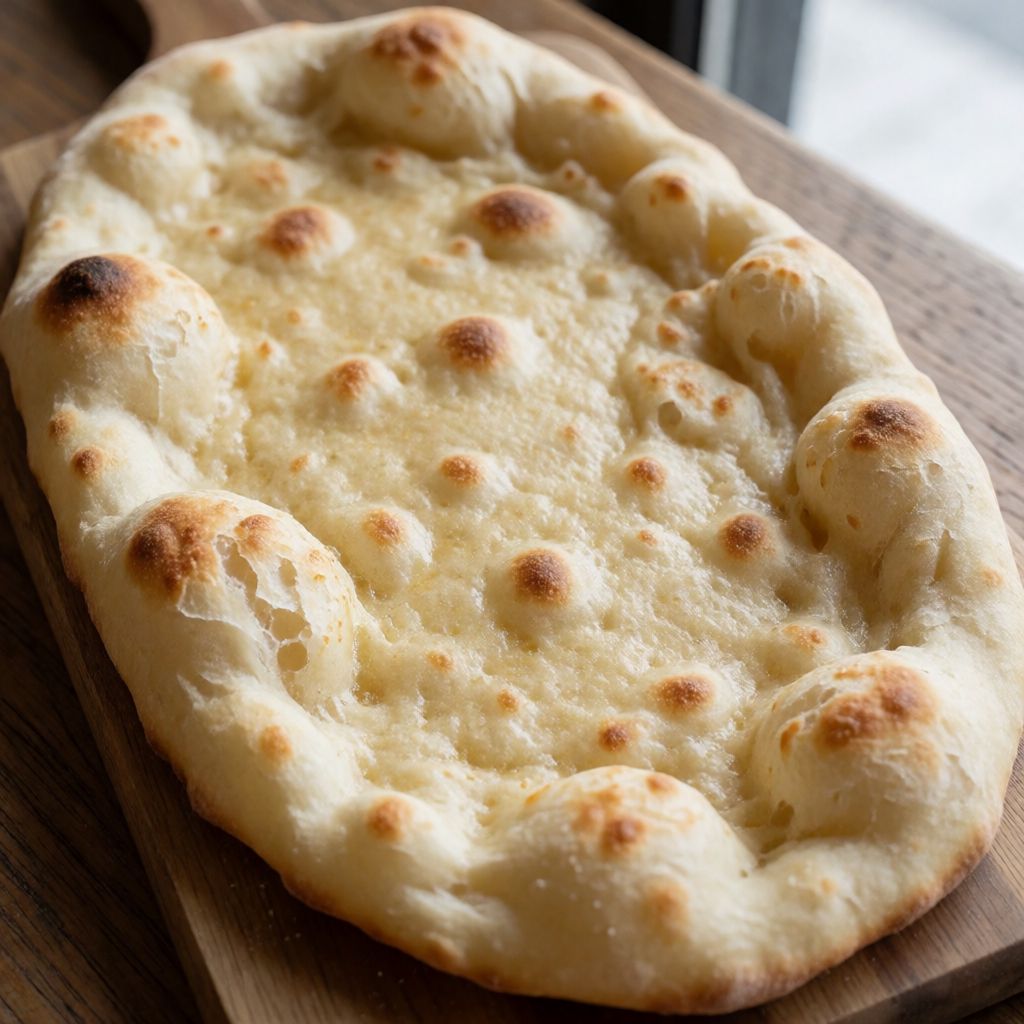
 AI photo
Roman Pinsa
A Roman-style pinsa with a light, crisp base topped with tomato, oregano and melted cheese.
Labels are worked out automatically from the ingredients and can be wrong. Check the packaging if it matters to you.
Ingredients
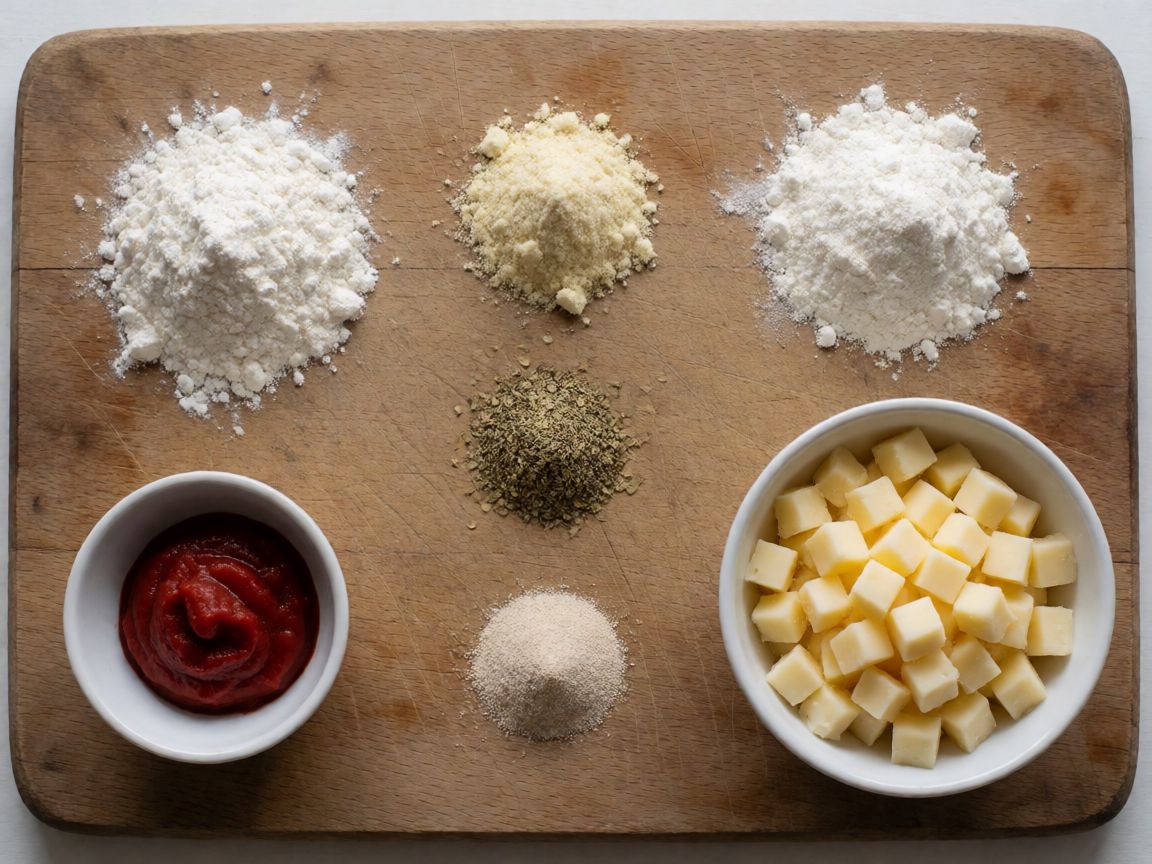
- 500 g Strong white flour
- 25 g Soy flour
- 25 g Rice flour
- 2 g Dried yeast or 7 g fresh yeast
- 8 g Salt
- 350 g Water
- 40 g Olive oil
- Oregano
- Tomato passata
- Provolone cut into small pieces, or another cheese of your choice





Steps
In the bowl of a stand mixer, combine the strong white flour, soy flour and rice flour, and mix on low speed until well combined.
Add the yeast and about half the water, adding the rest gradually. Add the salt and pour in the olive oil in a thin stream.
Add a little more water and increase the mixer speed. Keep kneading, gradually adding water, until the dough is smooth, compact and comes away from the sides of the bowl.
Tip the dough onto a work surface and shape it into a ball, folding the edges under a few times.
Place the dough in a bowl lightly greased with olive oil, cover with a tea towel and leave to rise at room temperature.
150 minDivide the dough into 3 pieces of 300-350 g each. Shape each piece, folding the edges under with your hands a few times.
Place the pieces in a container dusted with rice flour or semolina, cover and leave to rise at room temperature.
150 minTip the dough onto a work surface dusted with semolina, and stretch each piece out with your fingers.
Repeat on the other side, brushing off excess semolina, then transfer the pinsa onto a pizza peel or baking tray.
Sprinkle the surface with oregano, then spread over the tomato passata.
Bake in an oven preheated to its maximum temperature (around 250°C) for 8-10 minutes.
9 minAdd the provolone cut into small pieces (or another cheese) and return to the oven for a further 5-6 minutes.
Once the pinsa is ready, drizzle with olive oil and serve.
What was changed
The oven temperature was unspecified in the original, so was added as a typical maximum home oven temperature; all other ingredients are available locally and were kept as is.
Pinsa looks like pizza's cousin from Rome and gets mistaken for it constantly — flatbread, tomato, cheese, round-ish shape. But the thing that actually makes a pinsa a pinsa is the flour blend and the water it drinks, not the toppings. Three flours, not one: strong white carries the gluten structure, soy flour brings protein and a faint nuttiness plus better keeping, rice flour has no gluten at all and its job is to interrupt the strong flour's network just enough that the crumb stays open and light instead of chewy. That's the whole trick in one sentence — a dough that's wetter and more broken-up than pizza dough, so it bakes into something with a crisp shell and an airy, almost bready inside rather than a uniform chew.
Some say pinsa is just "Roman pizza with a fancy name" — no, because the dough hydration here (350g water to 500g flour, with 40g oil on top, pushing past 70%) is deliberately higher than most home pizza doughs, and that extra water is what gives you the big irregular holes when you tear the crust open. A stiffer dough simply can't do that; it bakes dense no matter how long you leave it.
Strong white flour is doing the structural job here — it's the one with enough protein to actually form gluten strands strong enough to trap gas and oven steam. Standard plain flour (what a lot of UK kitchens default to for baking) has less protein and will give you a slacker, less elastic dough; you can use it, but expect a flatter rise and less chew at the crust. If you want to go the other way, Italian "00" strong flour or Canadian bread flour both work fine — anything labelled strong or bread flour, nothing more exotic needed.
Soy flour and rice flour together are only 50g against 500g of white flour, but don't skip them as a throwaway detail. Soy flour is a protein booster and a natural humectant — it helps the dough hold moisture, which is part of why pinsa keeps better than ordinary pizza dough and doesn't go leathery by the time it's cold. Rice flour has zero gluten, so scattered through the dough it acts like tiny breaks in the gluten net — without it the dough would knit itself into one continuous, chewy sheet; with it, you get pockets, irregular bubbles, that open crumb pinsa is known for. If you genuinely can't find either, you can leave them out and use all strong flour, but the result drifts toward "thick pizza" rather than pinsa — looser crumb, longer keeping, that's the trade you're losing.
Yeast at 2g dried (or 7g fresh) against 500g flour is a small amount on purpose — this is a slow-fermentation dough, and a small amount of yeast over a long rise builds flavour and digestibility that a big dose of yeast over a short rise never will. Don't be tempted to add more "to speed it up"; you'll get a dough that rises fast and tastes of nothing, and loses the structure the long rise was building. The two rises here (150 minutes each, at room temperature, not shoved in an airing cupboard for warmth) are not padding — they're the ingredient that turns flour and water into something with actual flavour. Treat the time as a floor, not a target: a cooler kitchen, and British kitchens in winter often are cooler than Roman ones, means it may want longer before the dough visibly domes and feels soft and pillowy rather than tight.
Olive oil at 40g isn't there for flavour alone — it coats some of the gluten strands and makes the dough more extensible, easier to stretch thin without tearing, and it's part of why pinsa can be pulled into that elongated, slipper-like shape rather than snapping back. Use an oil with a clean, not overly bitter flavour for the dough itself; save a more characterful extra virgin for the drizzle at the end where you'll actually taste it raw.
Tomato passata, not tinned chopped tomatoes or passed-through puree with lumps — you want something smooth enough to spread thin without weighing the base down with excess liquid, since a thick wet layer on a high-hydration dough is how you end up with a soggy centre that never crisps. Provolone is suggested for its meltability and mild tang; if you can't get it, a semi-hard cheese that melts without turning oily — mozzarella, a mild cheddar in a pinch — does the job. Just cut it small as instructed: big slabs melt unevenly and leave cold pockets while the rest of the cheese has already browned.
The two-stage bake — passata and oregano first, cheese added later — exists to stop the cheese from scorching before the base has had its chance to set and colour. Add everything at once in a hot oven and you'll get burnt cheese sitting on a pale, underbaked crust. Give the base its own run first; the cheese only needs enough time to melt and just catch at the edges, which is a much shorter job than crisping dough.
·