
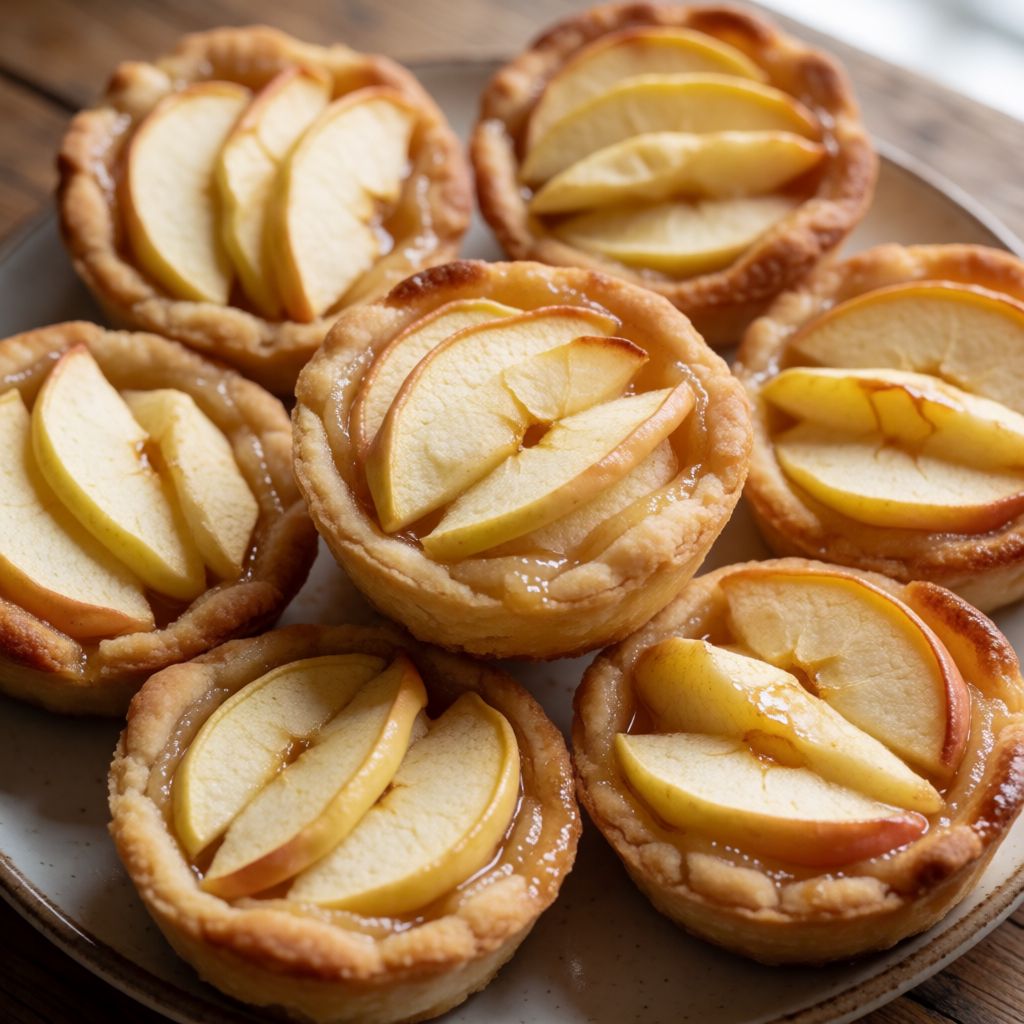
 AI photo
Apple Tartlets
Sweet yeasted tartlet shells filled with cooled lemon custard and topped with rose-cut apple slices.
Labels are worked out automatically from the ingredients and can be wrong. Check the packaging if it matters to you.
Ingredients
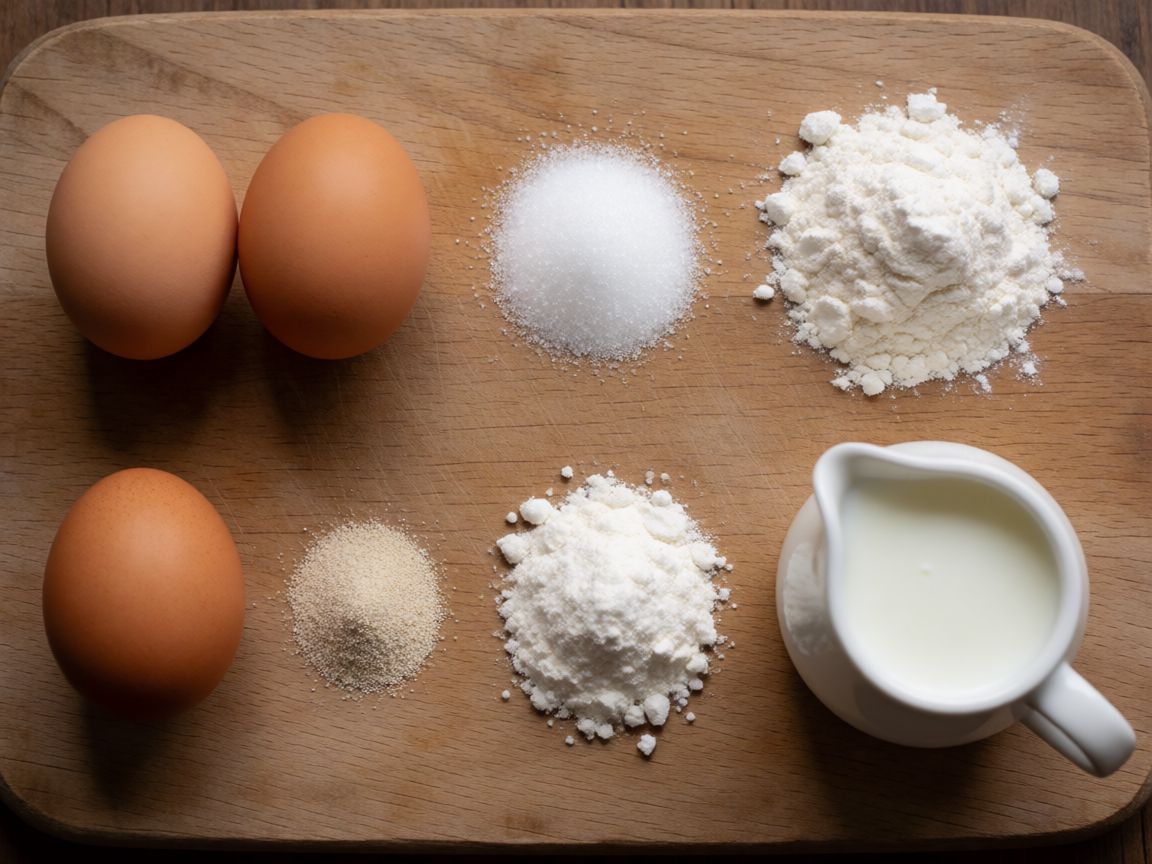
- 2 pcs Eggs
- 100 g Sugar
- 80 g Sunflower Oil
- 380 g Plain Flour
- 0.5 tsp Yeast
- 1 pcs Egg
- 2 tbsp Sugar
- 2 tbsp Plain Flour
- 250 ml Milk
- 1 pcs Lemon Zest
- 2 pcs Apple
- pinch Icing Sugar for dusting







Steps
Mix the egg with the sugar and sifted flour until smooth, gradually pouring in the hot milk while stirring constantly.
Add the grated lemon zest and cook the custard over low heat, stirring continuously, until it thickens to the right consistency.
Transfer the custard to a bowl, cover with cling film pressed directly onto the surface and leave to cool.
Beat the eggs with the sugar until light and smooth, then add the sunflower oil, yeast and sifted flour.
Turn the dough out onto a floured surface and quickly knead by hand until soft, springy and elastic.
Roll out the dough with a rolling pin to a 1 cm thick sheet and cut out circles 8 cm in diameter.
Grease the muffin tins with oil and dust with flour, line with the dough circles to form the base, then fill with the cooled custard.
Halve the apples, remove the cores and cut into thin slices with a vegetable peeler, then roll them up into a rose shape.
Bake the tartlets in an oven preheated to 180°C.
20 minLeave the tartlets to cool and dust with icing sugar before serving.
These are little pastry cups, dough on the outside, thick vanilla-less custard inside, topped with an apple sliced thin enough to coil into a rose. The whole thing stands or falls on three separate jobs done right: a dough that's sturdy enough to hold a shape but not tough, a custard cooked to the exact thickness where it sets but doesn't weep, and apple slices thin enough to bend around themselves without cracking. Get any one of those wrong and you get a soggy case, a runny middle, or a rose that falls apart into petals.
Some say custard needs careful, gentle, barely-there heat the whole way through — no, because the real danger isn't heat, it's lumps, and lumps come from pouring hot milk into cold flour-and-egg too fast, not from the stove being on. You whisk constantly and pour steadily, and the custard cooks itself in a few minutes once the structure's already smooth. The cling film pressed onto the surface after isn't fussiness — it stops a skin forming, because a skin is just the custard drying at the surface where air gets at it, and a skin means lumps you have to pick out later or stir into the filling.
This isn't a kazan dish, it's a muffin-tin dish — you need nothing you don't already own if you do a Sunday roast. A rolling pin, a muffin tray, a bowl. The oven does the one job a stove can't do for pastry: dry, even heat on all sides at once, which is why this bakes rather than fries or steams.
Flour is the backbone of two different mixtures here and they want different things from it. In the dough, 380 g gets worked with eggs, sugar, oil and a token half-teaspoon of yeast — that yeast isn't there to make bread rise, there's nothing like enough of it and no proving time given; it's there to lighten a dough that would otherwise be dense from the oil, giving it a slight lift so the baked case isn't a biscuit. In the custard, 2 tbsp flour is the thickener, doing the same job cornflour or custard powder would do, just with less shine and a flour note — use what's in the cupboard, the mechanism (starch swelling in hot liquid) doesn't care which bag it came from.
Sunflower oil in the dough is chosen because it has no flavour of its own to fight the lemon zest or the apple — any neutral oil works the same way, rapeseed is the obvious British stand-in and arguably more at home in a UK kitchen than sunflower. Butter would work differently: it firms up when cold, giving a shortcrust snap rather than this soft, springy texture the recipe asks for by hand-kneading until elastic, so don't swap it in expecting the same result.
The eggs split two ways: 2 go into the dough for structure and richness, 1 goes into the custard to help it set and give it body beyond what flour alone would do — don't merge these, a custard with no egg is thin, a dough with no egg is crumbly.
Lemon zest is doing a real job, not decoration: milk-and-flour custard on its own is flat, and zest's oils cut through that without adding liquid or sweetness you'd then have to rebalance. Use a vegetable peeler or the finest grater you have and avoid the white pith — that's where the bitterness lives, and it's the actual reason recipes keep saying "zest only."
The apple is the one ingredient with no real substitute, because the trick is mechanical: a peeler gives you ribbons thin enough to curl, and thin is what lets the slice bend into a rose instead of splitting. A sharper or softer eating apple is kinder here than a mealy baking apple — you want the slice to hold a curve, not collapse. Icing sugar at the end is dusted on cold or cooling tartlets, never hot ones, because heat melts it into a wet patch instead of leaving the fine white snow you actually want.
Ten tartlets, one tray, twenty minutes once the oven's hot — the custard cooling under its cling film is where the only real waiting happens, and that patience is not optional, it's what keeps the filling from being a hot, loose puddle in a half-baked case.