
 AI photo
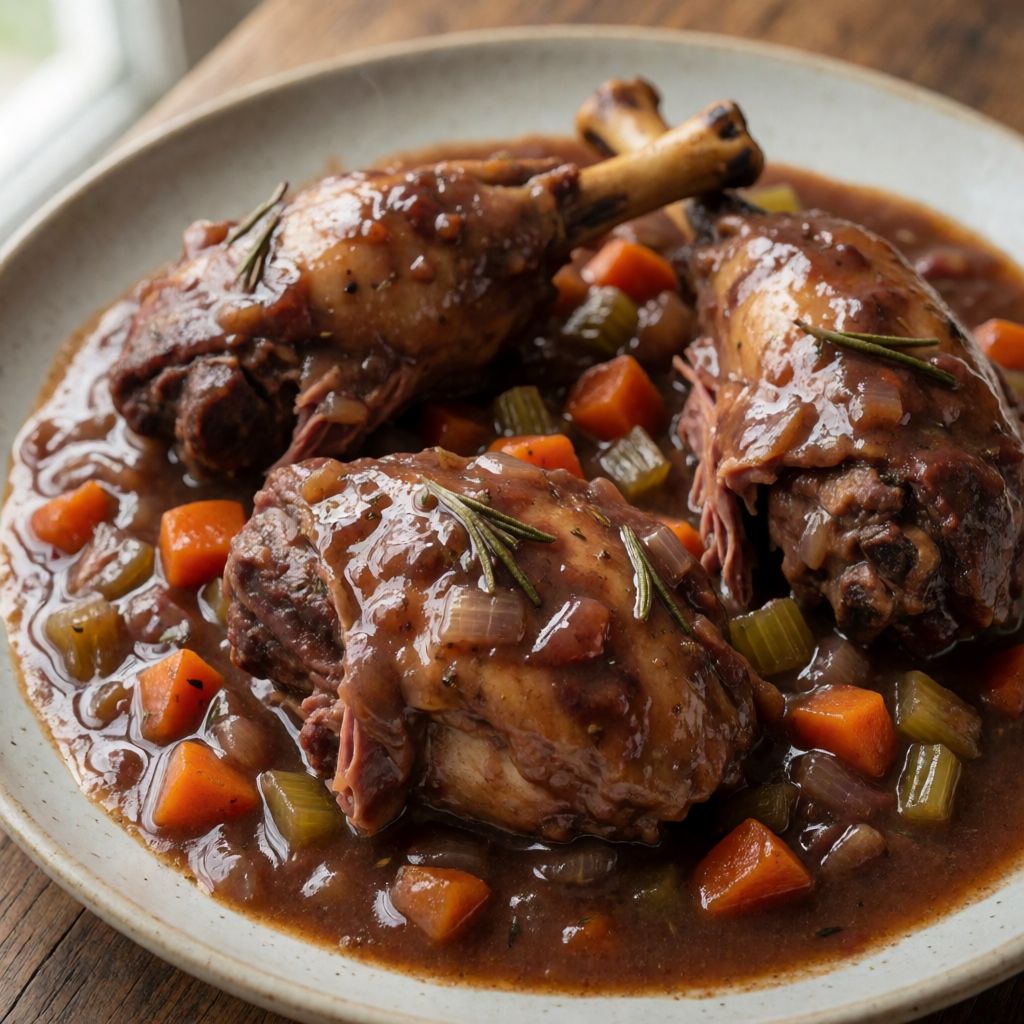
Rabbit in Salmì
A rich Italian-style rabbit stew, marinated overnight in red wine with herbs and spices, then braised until tender in its own deeply flavoured sauce.
Labels are worked out automatically from the ingredients and can be wrong. Check the packaging if it matters to you.
Ingredients
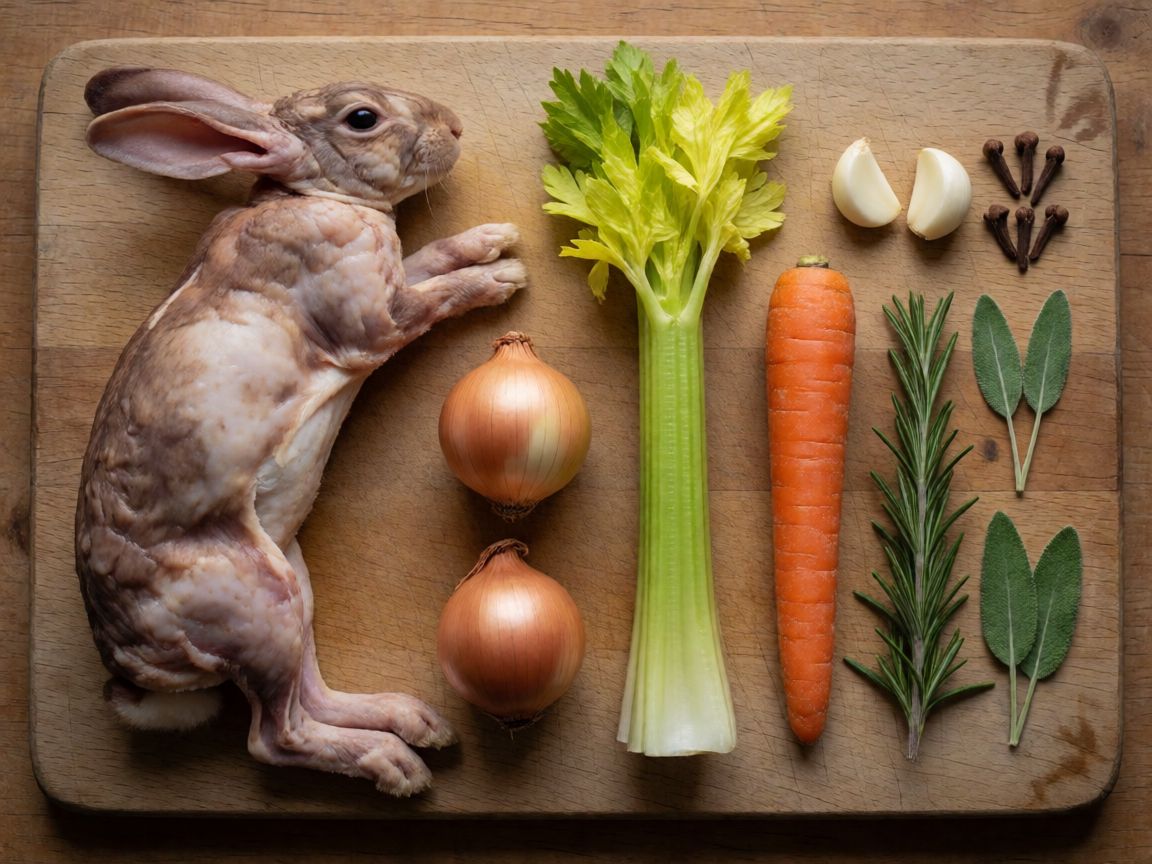
- 1.2 kg Rabbit
- 2 pcs Onions
- 1 pcs Celery stalk
- 1 pcs Carrot
- 2 clove Garlic peeled and crushed
- 2 pcs Rosemary
- 4 pcs Cloves
- 6 pcs Black peppercorns
- 4 pcs Sage
- 2 pcs Bay leaves
- 3 pcs Parsley
- 2 pcs Thyme
- 4 pcs Basil
- 1 pcs Cinnamon stick
- 1 l Red wine
- 6 tbsp Olive oil
- 2 tbsp Plain flour
- Salt to taste

















Steps
Remove the head, innards and excess fat from the rabbit, cut into large pieces, rinse and pat dry.
Place the rabbit in a container with the onion, carrot, celery, garlic, rosemary, cloves, thyme, sage, peppercorns, parsley, basil, bay leaves and cinnamon stick.
Pour over the wine, add salt, cover and marinate in the fridge for 12–24 hours.
720 minDrain the marinade, pat the pieces dry with kitchen paper and dust with flour.
Heat the olive oil and gently fry the second onion over low heat for about 10 minutes.
10 minTransfer the onion to a pot, add the rabbit and brown on both sides until golden.
Add the vegetables and spices from the marinade, cook gently, stirring and adding splashes of marinade as needed.
Cover the pot and braise for about 50–60 minutes until the meat is tender.
Season with salt and pepper to taste, and lift the rabbit pieces out into a separate dish.
Blend the remaining liquid to make the sauce.
Return the rabbit pieces to the pot, pour over the sauce and heat through.
Serve the rabbit in salmì.
Salmì is a hunter's way of dealing with an animal that was alive and running two days ago and is, frankly, lean and a bit stubborn. The word itself comes from "salmigondis" — a mix, a jumble — and that's exactly the method: you don't cook the rabbit so much as you dissolve a whole spice cupboard and a bottle of wine into it, then cook the meat inside that dissolved mixture. What decides whether it works is not the braising, which is forgiving, but the marinating, which is not. Twelve hours is the floor, not a suggestion you can shave down because you're hungry on Saturday.
Rabbit has almost no fat running through the muscle, unlike the lamb or beef you'd put in a Sunday roast. No fat means no built-in insurance against drying out, and it means the flesh has very little flavour of its own to fall back on. The wine-and-herb marinade is doing a job salt alone can't: it's pushing liquid and aromatics into the fibres over many hours, slowly, by osmosis, not by magic. Fry the same rabbit unmarinated and you get something edible but apologetic.
Some say marinating is just for flavour, so an hour will do if you're impatient. No — because the flavour that matters here isn't sitting on the surface, it's meant to be inside the muscle when it hits the hot pan, and that only happens on a timescale of hours, through tissue, not minutes, through contact. Rush it and you've made wine-splashed rabbit, not rabbit in salmì.
Rabbit itself: look for one close to the 1.2 kg mark, young rather than old — an old rabbit has tougher muscle fibre that even twelve hours of wine won't fully soften, and no amount of extra braising time will make up for the wrong animal. If rabbit isn't something your butcher stocks easily, chicken thighs on the bone will take the same marinade and method, though you lose the particular dry, gamey backbone the dish is built around — this stops being salmì in the strict sense and becomes something adjacent and still worth eating.
The wine is not a flavouring, it's the solvent. A full litre for 1.2 kg of meat looks like a lot until you remember it has to both marinate overnight and then reduce down to a sauce at the end — you're budgeting for evaporation and absorption, not just taste. Use something dry and unremarkable; an expensive bottle is wasted here because twelve hours of soaking, plus a long simmer, flattens anything delicate about it. This is where the cheap end of "cooking wine" earns its keep.
The spice list looks excessive until you notice what it actually is: cloves and cinnamon are there because this recipe has one foot in medieval and Renaissance Italian cookery, when game was routinely spiced the way we'd now reserve for puddings — sugar and sweet spice weren't yet divided off into "dessert" the way British kitchens divide them. So don't be alarmed that a savoury rabbit stew has a cinnamon stick in it; it's not a mistake, it's a fossil of an older palate. If you haven't got every single herb on the list — sage, thyme, rosemary, basil, parsley — don't panic and don't substitute for the sake of it. The point is bulk and variety of aromatic oil hitting the wine, not any one herb's personal contribution; losing one or two changes nothing you'll notice.
The flour dusting before browning is there to solve a specific problem: wine-soaked meat is wet meat, and wet meat put straight into oil steams rather than browns, giving you grey rabbit instead of a proper crust. Pat it properly dry first — paper towels, pressed on, not wiped — because flour on top of surface moisture just goes gluey rather than crisping. This is the one place your domestic hob matters: a kazan holds heat evenly across a wide base; your pan on a British hob will have a hot spot in the middle and cooler edges, so brown in batches rather than crowding the pot, or you'll end up with pieces that are pale on one side and nearly burnt on the other.
Olive oil here is just "an oil with no flavour you'll fight against" — any neutral oil with a reasonably high smoke point does the same job; olive oil is traditional because it's what an Italian kitchen had, not because rapeseed oil would ruin anything.
Blending the braising liquid at the end, rather than straining it and discarding the solids, is the whole economic logic of peasant and hunter cooking in one gesture: onion, celery and carrot that spent hours absorbing wine and rabbit fat are not rubbish, they're half the sauce's body. Throwing them away and serving a thin, strained gravy instead would be the real waste here — not of money, since vegetables are cheap, but of the hours you already spent extracting flavour into them. Patience is the ingredient that makes all the others worth using; everything else on the list is just doing what patience lets it do.